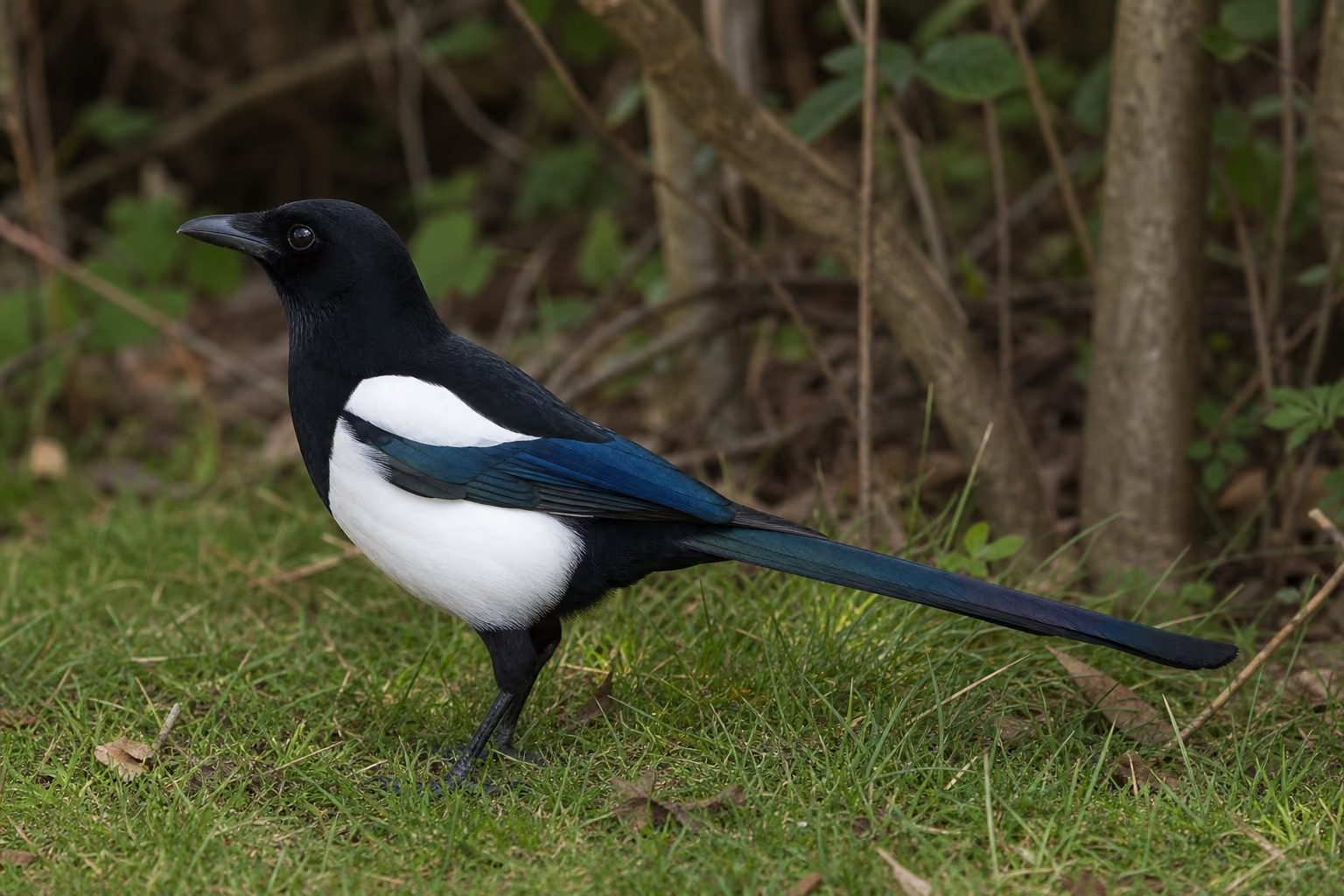
Eurasian magpie

Details

Eurasian magpie

Pica pica

Size
44–46 cm · 180–250 g
Diet
Omnivore
Activity
Diurnal
Sociality
Loose group
Lifespan

A black-and-white corvid widespread across Eurasia, with a long tail, iridescent wings, and notably flexible intelligence.

View in catalog
Key facts

  • Eurasian magpie (Pica pica) is an omnivore animal classified as Bird · Passeriformes · Corvidae.
  • Primary habitats are forest · grassland · urban, with a range across Palearctic.
  • Activity is diurnal, sociality is loose group, and conservation status is LC (Least Concern).
  • A black-and-white corvid widespread across Eurasia, with a long tail, iridescent wings, and notably flexible intelligence.
  • Uses farmland, woodland edges, parks, towns, and open forests, favoring a mix of trees and open feeding areas.

Range

Habitat range map
Native rangeOccasional / Transient
PalearcticPalearcticPalearcticPalearcticPalearcticPalearcticPalearcticPalearcticPalearcticPalearcticPalearcticPalearcticPalearcticPalearcticPalearcticPalearcticPalearcticPalearcticPalearcticPalearcticPalearcticPalearcticPalearcticPalearctic

Map: Ecoregions 2017 © RESOLVE (CC BY 4.0) · Natural Earth (PD)

Details

Habitat

Uses farmland, woodland edges, parks, towns, and open forests, favoring a mix of trees and open feeding areas.

Appearance

It has a black head and back, white belly and shoulders, and a long tail. Wings and tail flash blue-green or purple iridescence.

Behavior

Pairs or small groups forage on the ground, communicate with harsh calls, and defend nest areas strongly.

Feeding

It is omnivorous, eating insects, fruit, seeds, carrion, eggs, small animals, and human scraps.

Reproduction

Pairs build domed stick nests in trees and bring a wide range of foods to their chicks.

Notes

A corvid known from mirror-recognition studies, it thrives near people through flexible behavior and diet.