Asian giant hornet

Details

Asian giant hornet

Vespa mandarinia

Size
2.7–5.5 cm · 0.5–2.5 g
Diet
Carnivore
Activity
Diurnal
Sociality
Colony
Lifespan
less than 1 year

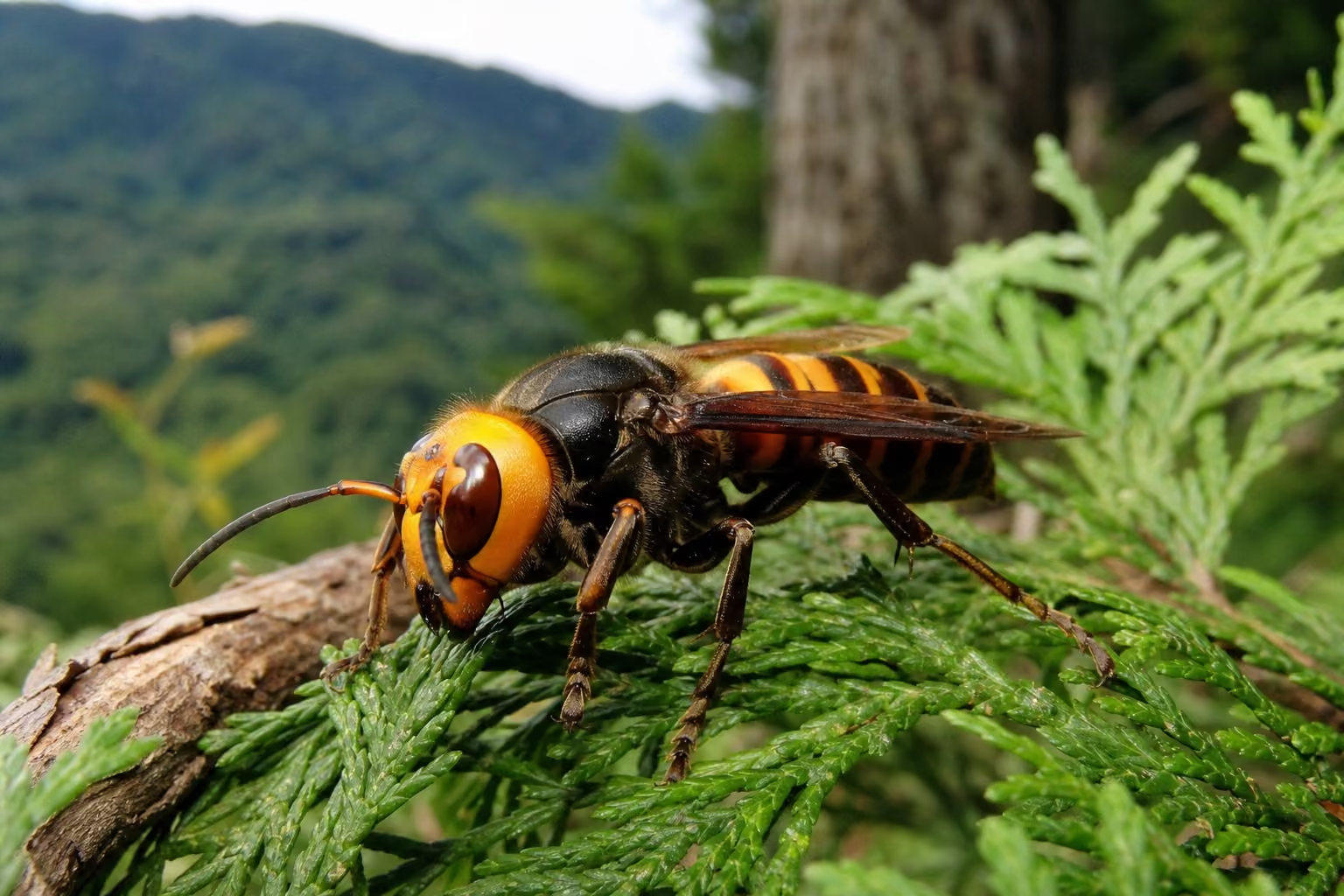
The Asian giant hornet is a large social wasp with powerful jaws. Workers hunt by day and carry insect prey back to the colony.

View in catalog
Key facts

  • Asian giant hornet (Vespa mandarinia) is a carnivore animal classified as Invertebrate · Hymenoptera · Vespidae.
  • Primary habitats are forest · grassland, with a range across Palearctic · Indomalayan.
  • Activity is diurnal, sociality is colony, and conservation status is LC (Least Concern).
  • The Asian giant hornet is a large social wasp with powerful jaws.
  • It lives in forests and grasslands of the Palearctic, the Indomalayan region.
  • Typical lifespan: less than 1 year

Range

Habitat range map
Native rangeOccasional / Transient
PalearcticPalearcticPalearcticPalearcticPalearcticPalearcticPalearcticPalearcticPalearcticPalearcticPalearcticPalearcticPalearcticPalearcticPalearcticPalearcticPalearcticPalearcticPalearcticPalearcticPalearcticPalearcticPalearcticPalearcticIndomalayanIndomalayanIndomalayanIndomalayanIndomalayanIndomalayanIndomalayanIndomalayanIndomalayanIndomalayanIndomalayanIndomalayanIndomalayanIndomalayanIndomalayan

Map: Ecoregions 2017 © RESOLVE (CC BY 4.0) · Natural Earth (PD)

Details

Habitat

It lives in forests and grasslands of the Palearctic, the Indomalayan region. Nests are built in protected cavities such as soil hollows or spaces near tree roots.

Appearance

Length 2.7-5.5 cm; weight 0.5 g-2.5 g. A large orange head, dark-and-yellow abdomen, and heavy mandibles stand out. Its size gives it a strong, audible flight.

Behavior

Diurnal and colonial, it lives in nests headed by a queen and workers. Colonies defend nests strongly and may attack other insects in groups at food sources.

Feeding

A carnivore, workers capture insects to feed larvae. Adults also use tree sap and nutrient fluids produced by larvae.

Reproduction

A queen starts the nest alone in spring, and workers expand it as they emerge. New queens and males are produced in autumn, and mated queens overwinter.

Notes

It is listed as Least Concern, though local populations can still be affected by habitat change, collection, or pollution.