Arabian bustard

Details

Arabian bustard

Ardeotis arabs

Size
Wingspan 1.5–1.7 m · 4–10 kg
Diet
Omnivore
Activity
Diurnal
Sociality
Solitary
Lifespan
8-25 years

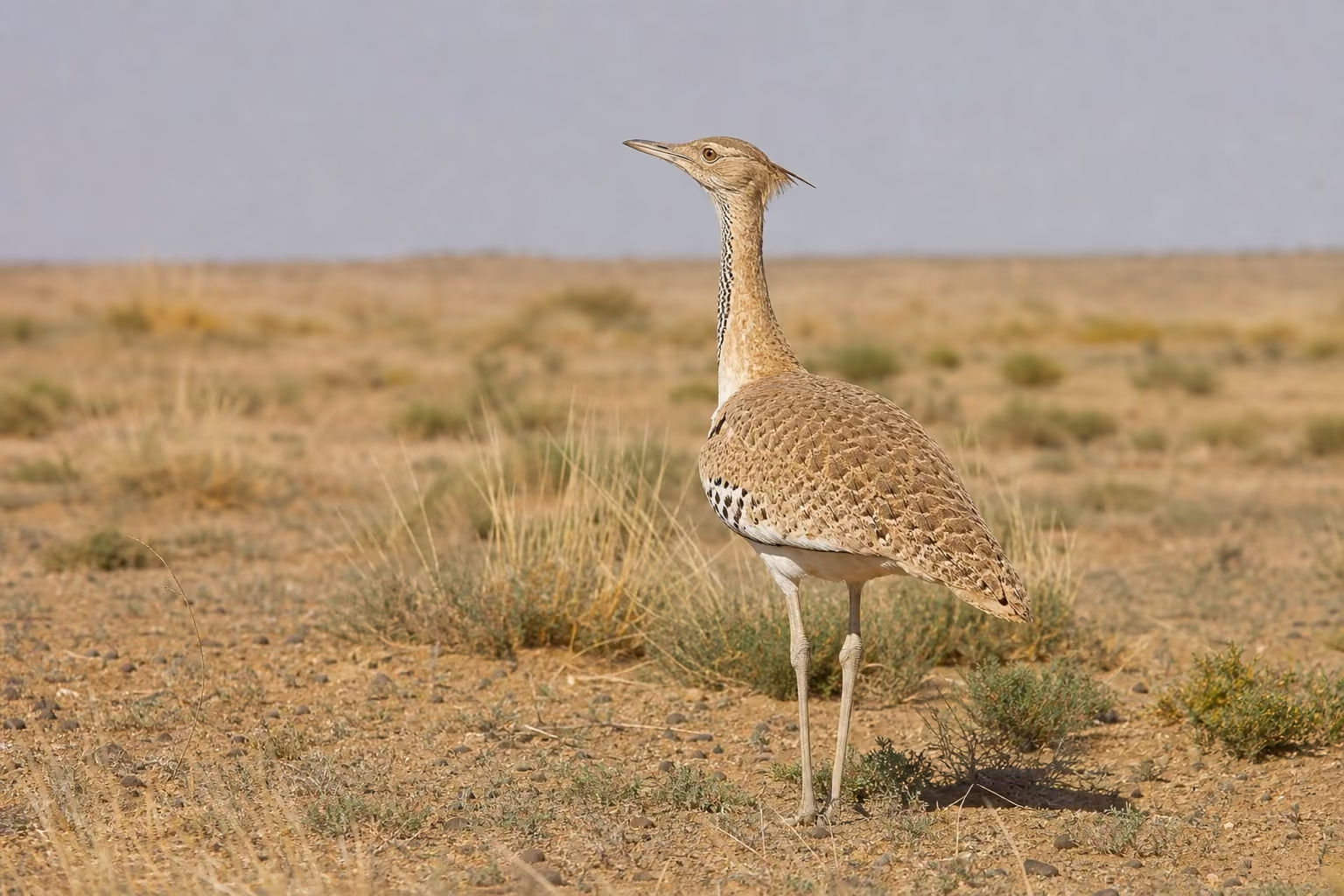
The Arabian bustard is a large bird of deserts and grasslands from northeastern Africa into Arabia. Diurnal and mostly solitary, it forages on the ground.

View in catalog
Key facts

  • Arabian bustard (Ardeotis arabs) is an omnivore animal classified as Bird · Otidiformes · Otididae.
  • Primary habitats are desert · grassland, with a range across Afrotropical · Palearctic.
  • Activity is diurnal, sociality is solitary, and conservation status is NT (Near Threatened).
  • The Arabian bustard is a large bird of deserts and grasslands from northeastern Africa into Arabia.
  • It uses dry grassland, semidesert, and open country with low vegetation.
  • Typical lifespan: 8-25 years

Range

Habitat range map
Native rangeOccasional / Transient
PalearcticPalearcticPalearcticPalearcticPalearcticPalearcticPalearcticPalearcticPalearcticPalearcticPalearcticPalearcticPalearcticPalearcticPalearcticPalearcticPalearcticPalearcticPalearcticPalearcticPalearcticPalearcticPalearcticPalearcticAfrotropicalAfrotropicalAfrotropicalAfrotropical

Map: Ecoregions 2017 © RESOLVE (CC BY 4.0) · Natural Earth (PD)

Details

Habitat

It uses dry grassland, semidesert, and open country with low vegetation. Visibility and enough cover for concealment both matter.

Appearance

Wingspan is about 150-170 cm and weight about 4-10 kg. Long legs and neck, brown mottling, and a large walking body are characteristic.

Behavior

Diurnal birds move alone or in small numbers. When disturbed, they often walk away before taking strong flight if needed.

Feeding

It is omnivorous, eating herbs, seeds, insects, and small animals. Food is picked from the ground while walking.

Reproduction

A shallow nest is made on the ground, where eggs and chicks blend with the surroundings. Adults guard young in open habitat.

Notes

Its status is listed as Near Threatened. Dryland conversion, hunting pressure, and disturbance at breeding sites are concerns.