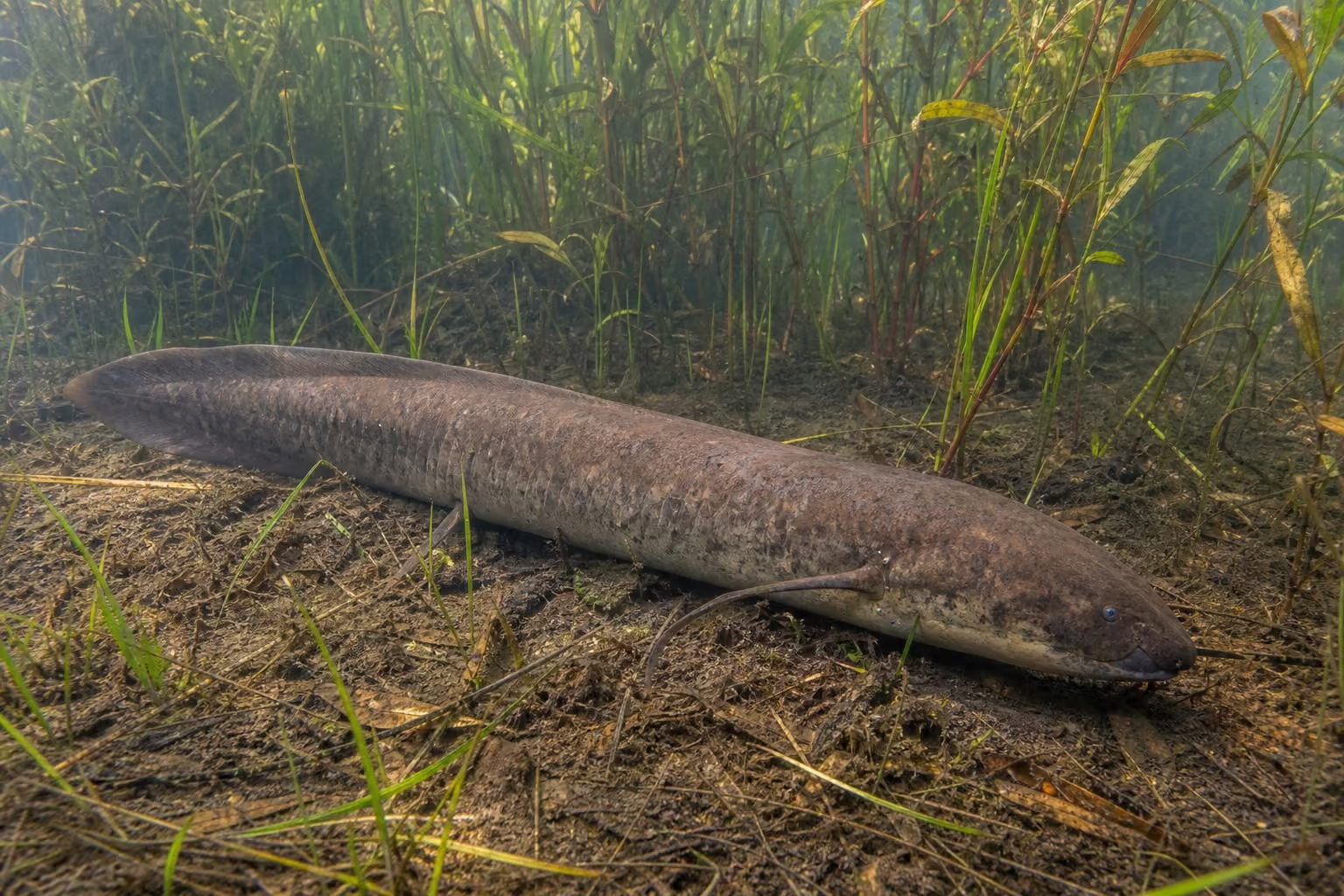
West African lungfish

Details

West African lungfish

Protopterus annectens

Size
0.4–1 m · 1–4 kg
Diet
Carnivore
Activity
Nocturnal
Sociality
Solitary
Lifespan
15–25 years

The West African lungfish is a freshwater fish able to breathe air with lungs. It can wait out dry seasons in mud and hunts small animals at night.

View in catalog
Key facts

  • West African lungfish (Protopterus annectens) is a carnivore animal classified as Fish · Ceratodontiformes · Protopteridae.
  • Primary habitats are freshwater · grassland, with a range across Afrotropical.
  • Activity is nocturnal, sociality is solitary, and conservation status is LC (Least Concern).
  • The West African lungfish is a freshwater fish able to breathe air with lungs.
  • It lives in rivers, swamps, floodplains, and grassy freshwater of the Afrotropics.
  • Typical lifespan: 15–25 years

Range

Habitat range map
Native rangeOccasional / Transient
AfrotropicalAfrotropicalAfrotropicalAfrotropical

Map: Ecoregions 2017 © RESOLVE (CC BY 4.0) · Natural Earth (PD)

Details

Habitat

It lives in rivers, swamps, floodplains, and grassy freshwater of the Afrotropics. It is adapted to waters that may shrink or dry seasonally.

Appearance

Length 40-100 cm; weight 1 kg-4 kg. The body is elongated with threadlike pectoral and pelvic fins and small scales. A broad mouth suits probing muddy bottoms.

Behavior

Nocturnal and solitary, it burrows into mud as water falls. A mucus cocoon helps it aestivate while breathing air.

Feeding

A carnivore, it eats mollusks, crustaceans, insects, and fish. Strong dental plates crush hard prey.

Reproduction

Breeding occurs in the rainy season in a nest or burrow, where the male guards eggs and young. Rising water helps trigger spawning.

Notes

It is listed as Least Concern, though local populations can still be affected by habitat change, collection, or pollution.