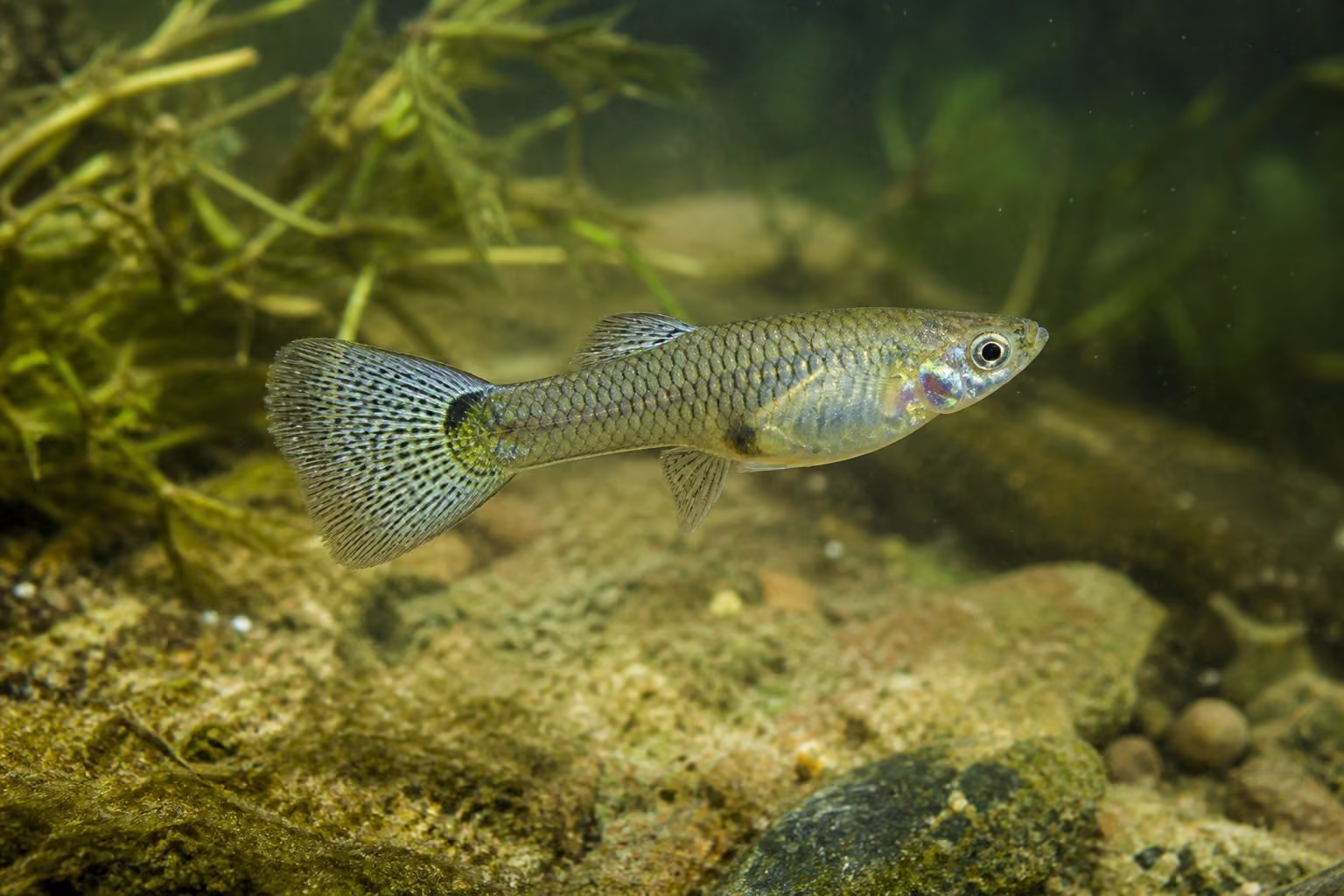
Guppy

Details

Guppy

Poecilia reticulata

Size
3–6 cm · 1–3 g
Diet
Omnivore
Activity
Diurnal
Sociality
Loose group
Lifespan
2–3 years

The guppy is a small livebearing fish of northern South America and nearby islands. It swims in loose groups in shallow freshwater, with males often brightly patterned.

View in catalog
Key facts

  • Guppy (Poecilia reticulata) is an omnivore animal classified as Fish · Cyprinodontiformes · Poeciliidae.
  • Primary habitats are freshwater · grassland, with a range across Neotropical.
  • Activity is diurnal, sociality is loose group, and conservation status is LC (Least Concern).
  • The guppy is a small livebearing fish of northern South America and nearby islands.
  • It inhabits creeks, ponds, ditches, and grassy freshwater in the Neotropics.
  • Typical lifespan: 2–3 years

Range

Habitat range map
Native rangeOccasional / Transient
NeotropicalNeotropicalNeotropicalNeotropicalNeotropicalNeotropicalNeotropicalNeotropical

Map: Ecoregions 2017 © RESOLVE (CC BY 4.0) · Natural Earth (PD)

Details

Habitat

It inhabits creeks, ponds, ditches, and grassy freshwater in the Neotropics. Slow shallows and plant cover are commonly used.

Appearance

Length 3-6 cm; weight 1 g-3 g. Small and light-bodied, males often carry vivid spots and colors on the body and tail. Females are usually larger and plainer.

Behavior

Diurnal and loosely schooling, it often moves near the surface. Males display their colors close to females during courtship.

Feeding

An omnivore, it eats small insects, algae, and detritus. It picks food from the surface and fine particles drifting past.

Reproduction

It is livebearing, giving birth to developed fry rather than laying exposed eggs. Parental care is limited, and young hide among plants and shallows.

Notes

It is listed as Least Concern, though local populations can still be affected by habitat change, collection, or pollution.