Wood stork

Details

Wood stork

Mycteria americana

Size
0.8–1.2 m · 2–3.3 kg
Diet
Carnivore
Activity
Diurnal
Sociality
Colony
Lifespan
11–18 years

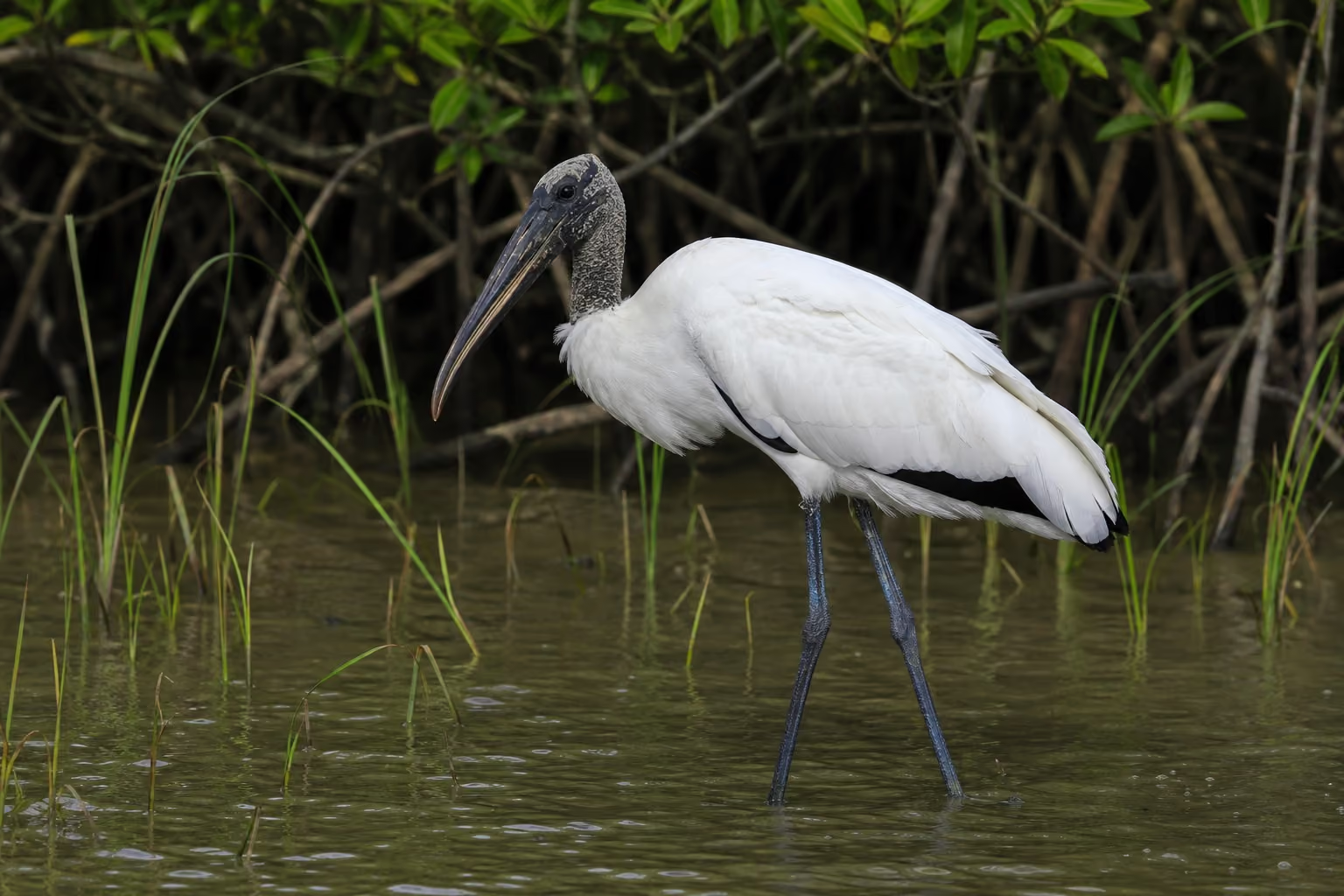
The wood stork is a large wetland stork of the Americas. A bare dark head and heavy downcurved bill suit its tactile search for fish in shallow water.

View in catalog
Key facts

  • Wood stork (Mycteria americana) is a carnivore animal classified as Bird · Ciconiiformes · Ciconiidae.
  • Primary habitats are freshwater · coast, with a range across Nearctic · Neotropical.
  • Activity is diurnal, sociality is colony, and conservation status is LC (Least Concern).
  • The wood stork is a large wetland stork of the Americas.
  • It uses marshes, swamps, floodplains, mangroves, and shallow ponds from southern Nearctic areas into the Neotropics.
  • Typical lifespan: 11–18 years

Range

Habitat range map
Native rangeOccasional / Transient
NearcticNearcticNearcticNearcticNearcticNearcticNearcticNearcticNearcticNearcticNearcticNearcticNearcticNearcticNearcticNearcticNearcticNearcticNearcticNearcticNearcticNearcticNearcticNearcticNearcticNearcticNearcticNearcticNearcticNearcticNearcticNearcticNearcticNearcticNearcticNearcticNearcticNearcticNearcticNearcticNearcticNeotropicalNeotropicalNeotropicalNeotropicalNeotropicalNeotropicalNeotropicalNeotropical

Map: Ecoregions 2017 © RESOLVE (CC BY 4.0) · Natural Earth (PD)

Details

Habitat

It uses marshes, swamps, floodplains, mangroves, and shallow ponds from southern Nearctic areas into the Neotropics. Feeding is best where falling water concentrates fish.

Appearance

Length is 83-115 cm and weight 2-3.3 kg. It has a white body, black flight feathers, a dark bare head, long dark legs, and a thick downcurved bill.

Behavior

Diurnal and colonial, it walks slowly through shallows. The bill is held open and snaps shut instantly when prey touches it.

Feeding

A carnivore, it feeds mainly on fish, with frogs, crustaceans, and aquatic insects also taken. Tactile feeding works well in muddy water.

Reproduction

Colonies nest in trees over or near water. Parents feed chicks by regurgitation, and seasonal water levels strongly influence breeding success.

Notes

It is listed as Least Concern. The species depends on broad wetland hydrology, so drainage and altered water management can affect nesting and feeding areas.