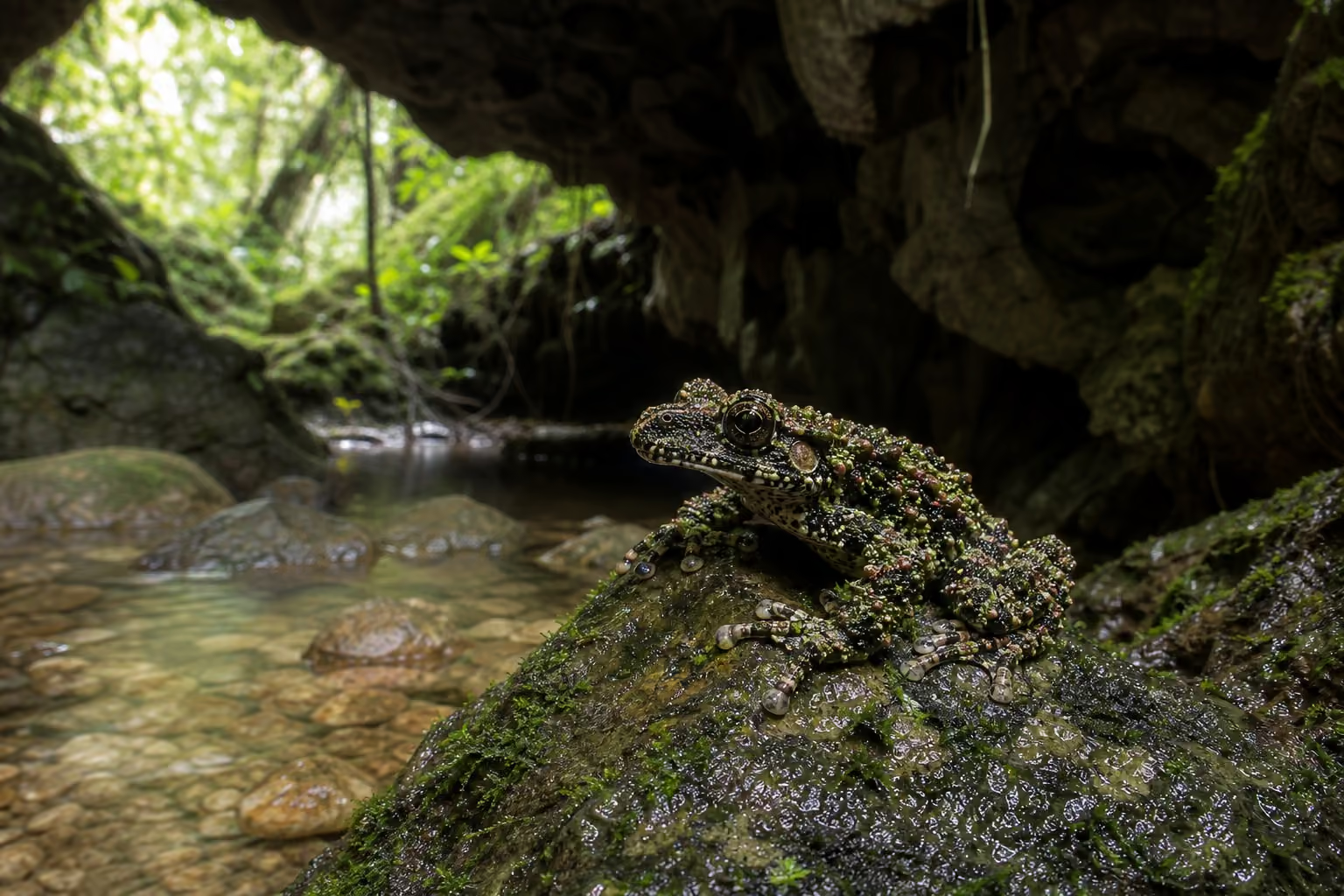
Vietnamese mossy frog

Details

Vietnamese mossy frog

Theloderma corticale

Size
6–9 cm · 12–25 g
Diet
Carnivore
Activity
Nocturnal
Sociality
Solitary
Lifespan
8–12 years

The Vietnamese mossy frog is a well-camouflaged frog of Indomalayan forest and freshwater habitats. It is a solitary nocturnal carnivore.

View in catalog
Key facts

  • Vietnamese mossy frog (Theloderma corticale) is a carnivore animal classified as Amphibian · Anura · Rhacophoridae.
  • Primary habitats are forest · freshwater, with a range across Indomalayan.
  • Activity is nocturnal, sociality is solitary, and conservation status is LC (Least Concern).
  • The Vietnamese mossy frog is a well-camouflaged frog of Indomalayan forest and freshwater habitats.
  • It uses damp forest rocks, streams, and cave edges.
  • Typical lifespan: 8–12 years

Range

Habitat range map
Native rangeOccasional / Transient

Map: Ecoregions 2017 © RESOLVE (CC BY 4.0) · Natural Earth (PD)

Details

Habitat

It uses damp forest rocks, streams, and cave edges. The structured animal data lists China among its countries.

Appearance

Body length is about 6-9 cm and weight about 12-25 g. Bumpy green-and-black skin closely resembles moss-covered stone.

Behavior

It is nocturnal and solitary. It clings to rock or vegetation and freezes when threatened, blending into the background.

Feeding

It is carnivorous, eating insects and small invertebrates. At night it strikes prey that passes close by.

Reproduction

Breeding is tied to water edges and damp rock habitats. Tadpoles hatch and develop in freshwater.

Notes

Its conservation status is LC. Although the common name points to Vietnam, this entry follows the country data present in the structured source.