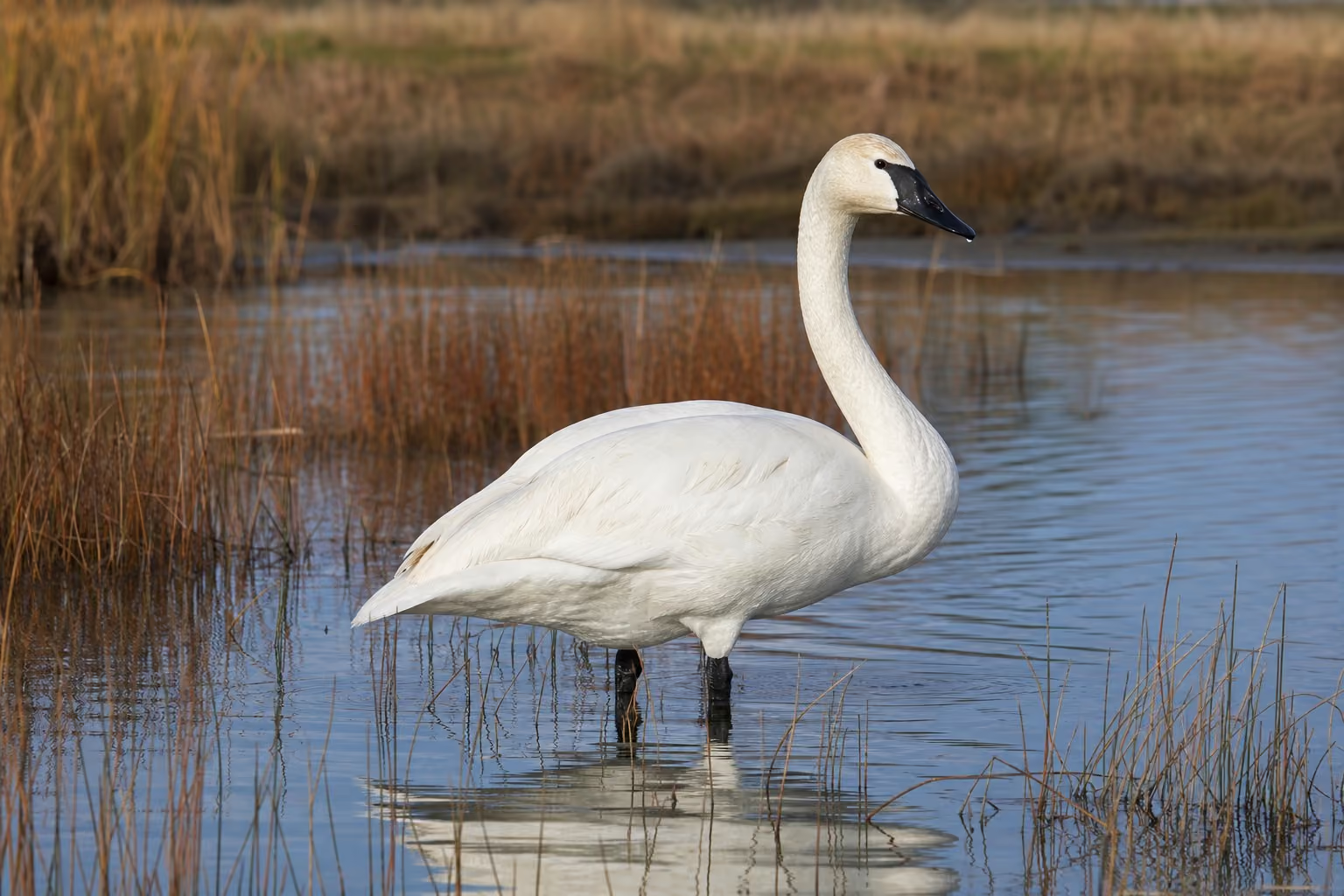
Trumpeter swan

Details

Trumpeter swan

Cygnus buccinator

Size
Wingspan 1.9–2.5 m · 7–13.6 kg
Diet
Herbivore
Activity
Diurnal
Sociality
Pair
Lifespan
8-25 years

The trumpeter swan is a large swan of North American freshwater wetlands. Diurnal pairs use marshes, lakes, and slow waters.

View in catalog
Key facts

  • Trumpeter swan (Cygnus buccinator) is a herbivore animal classified as Bird · Anseriformes · Anatidae.
  • Primary habitats are freshwater, with a range across Nearctic.
  • Activity is diurnal, sociality is pair, and conservation status is LC (Least Concern).
  • The trumpeter swan is a large swan of North American freshwater wetlands.
  • It uses shallow lakes, marshes, ponds, and slow rivers.
  • Typical lifespan: 8-25 years

Range

Habitat range map
Native rangeOccasional / Transient
NearcticNearcticNearcticNearcticNearcticNearcticNearcticNearcticNearcticNearcticNearcticNearcticNearcticNearcticNearcticNearcticNearcticNearcticNearcticNearcticNearcticNearcticNearcticNearcticNearcticNearcticNearcticNearcticNearcticNearcticNearcticNearcticNearcticNearcticNearcticNearcticNearcticNearcticNearcticNearcticNearctic

Map: Ecoregions 2017 © RESOLVE (CC BY 4.0) · Natural Earth (PD)

Details

Habitat

It uses shallow lakes, marshes, ponds, and slow rivers. Abundant aquatic plants and open water for takeoff are important.

Appearance

Wingspan is about 185-250 cm and weight about 7-13.6 kg. White plumage, a long neck, and a black bill mark a very large, powerful flyer.

Behavior

Active by day, it moves in pairs or family groups. Its loud trumpeting call carries over water, and takeoff requires a running start.

Feeding

It is herbivorous, eating aquatic plants, roots, stems, and grasses. The long neck reaches underwater vegetation in shallow areas.

Reproduction

Pairs build large plant nests near water and defend territories. Cygnets are precocial and grow while swimming with their parents.

Notes

Its status is listed as Least Concern. Protection helped recovery in some areas, and quiet wetlands with aquatic plants remain important.