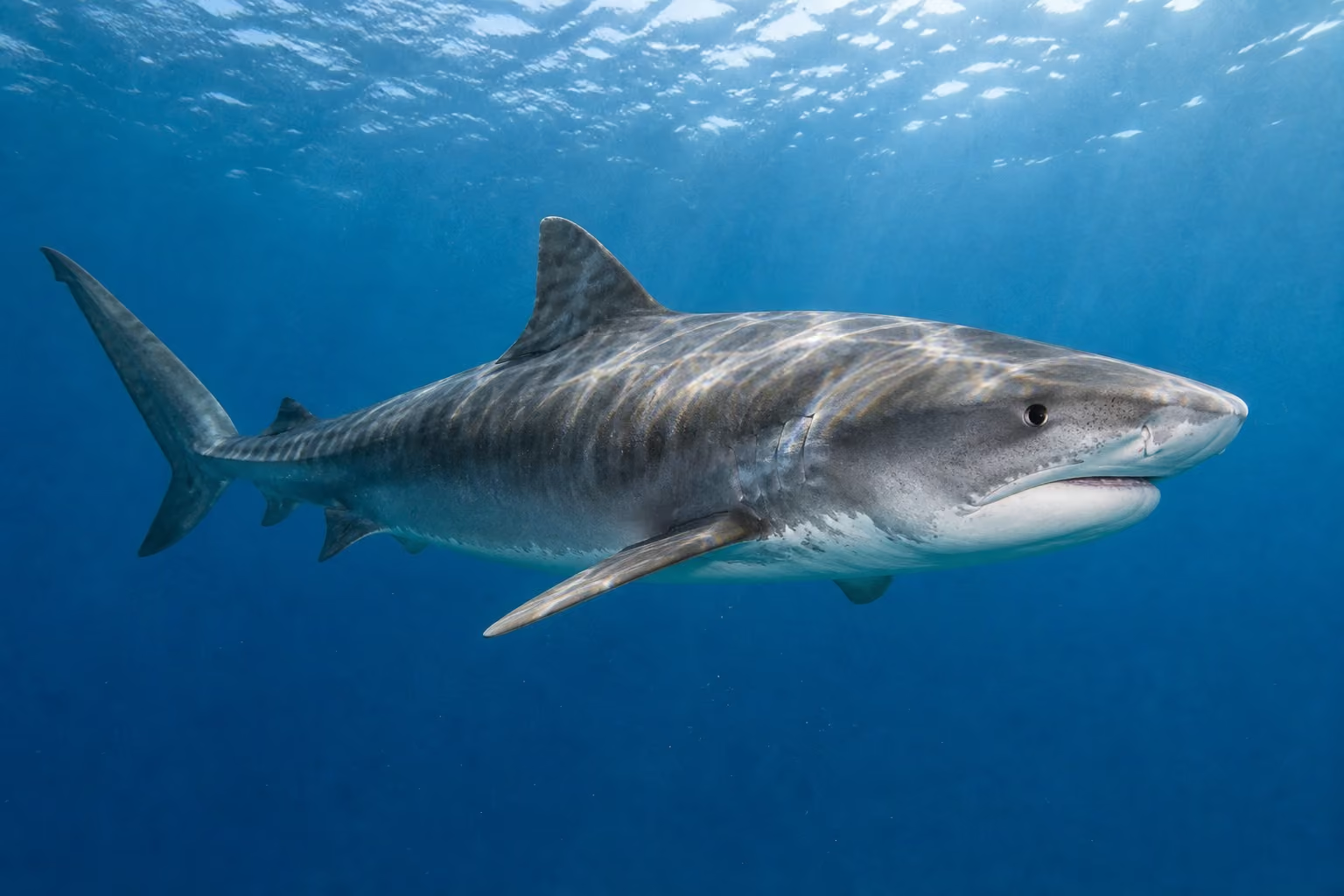
Tiger shark

Details

Tiger shark

Galeocerdo cuvier

Size
3–5.5 m · 300–900 kg
Diet
Carnivore
Activity
Cathemeral
Sociality
Loose group
Lifespan
5-20 years

The tiger shark is a large ocean shark found across the Atlantic, Indian, and Pacific oceans. Active across day and night, it roams alone or loosely near others.

View in catalog


Key facts

  • Tiger shark (Galeocerdo cuvier) is a carnivore animal classified as Fish · Carcharhiniformes · Galeocerdonidae.
  • Primary habitats are open ocean, with a range across Atlantic Ocean · Indian Ocean · Pacific Ocean.
  • Activity is cathemeral, sociality is loose group, and conservation status is NT (Near Threatened).
  • The tiger shark is a large ocean shark found across the Atlantic, Indian, and Pacific oceans.
  • It uses tropical and warm-temperate open waters, island margins, offshore coasts, and deeper seas.
  • Typical lifespan: 5-20 years

Range

Habitat range map
Native rangeOccasional / Transient
Pacific OceanPacific OceanPacific OceanAtlantic OceanAtlantic OceanAtlantic OceanAtlantic OceanAtlantic OceanIndian Ocean

Map: Ecoregions 2017 © RESOLVE (CC BY 4.0) · Natural Earth (PD)

Details

Habitat

It uses tropical and warm-temperate open waters, island margins, offshore coasts, and deeper seas. It also enters shallower coastal areas while ranging widely.

Appearance

Length is about 300-550 cm and weight about 300-900 kg. A heavy body, broad head, and tiger-like bars most visible in young fish give it its name.

Behavior

It patrols broad areas alone, with loose overlap where food is abundant. Tiger sharks are investigative predators and may inspect many kinds of objects.

Feeding

It is carnivorous, eating fish, sharks, rays, seabirds, sea turtles, carrion, and many other animals. Strong teeth handle tough shells and bones.

Reproduction

It is live-bearing, producing young that develop inside the mother. Juveniles grow in relatively shallow coastal habitats.

Notes

Its status is listed as Near Threatened. Bycatch and directed fishing affect it, and its wide movements call for management across regions.