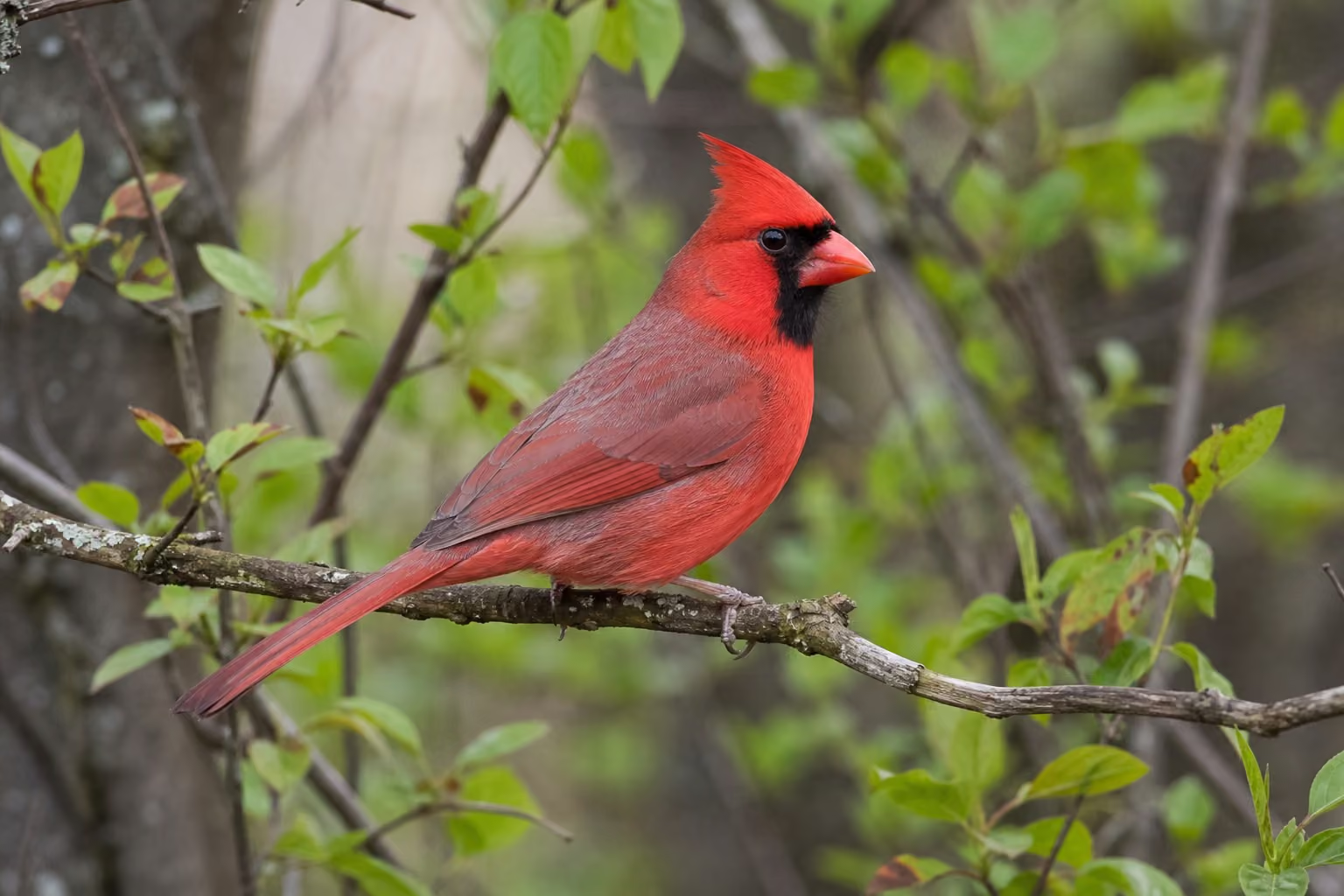
Northern cardinal

Details

Northern cardinal

Cardinalis cardinalis

Size
Wingspan 25–31 cm · 33–65 g
Diet
Omnivore
Activity
Diurnal
Sociality
Pair
Lifespan
8-25 years

The northern cardinal is a conspicuous songbird of North American shrubs and gardens. Diurnal pairs defend territories with song.

View in catalog
Key facts

  • Northern cardinal (Cardinalis cardinalis) is an omnivore animal classified as Bird · Passeriformes · Cardinalidae.
  • Primary habitats are forest · urban, with a range across Nearctic.
  • Activity is diurnal, sociality is pair, and conservation status is LC (Least Concern).
  • The northern cardinal is a conspicuous songbird of North American shrubs and gardens.
  • It uses shrubland, woodland edges, hedges, yards, and parks.
  • Typical lifespan: 8-25 years

Range

Habitat range map
Native rangeOccasional / Transient
NearcticNearcticNearcticNearcticNearcticNearcticNearcticNearcticNearcticNearcticNearcticNearcticNearcticNearcticNearcticNearcticNearcticNearcticNearcticNearcticNearcticNearcticNearcticNearcticNearcticNearcticNearcticNearcticNearcticNearcticNearcticNearcticNearcticNearcticNearcticNearcticNearcticNearcticNearcticNearcticNearctic

Map: Ecoregions 2017 © RESOLVE (CC BY 4.0) · Natural Earth (PD)

Details

Habitat

It uses shrubland, woodland edges, hedges, yards, and parks. Dense cover supports nesting and shelter, while open ground aids feeding.

Appearance

Wingspan is about 25-31 cm and weight about 33-65 g. Males are bright red, females warm brown with red tones, and both have a crest and heavy bill.

Behavior

Active by day, pairs hold territories through song and chasing. Birds make short flights through cover and often feed on the ground.

Feeding

It is omnivorous, eating seeds, fruit, and insects. The stout bill cracks seeds, while insects become more important during breeding.

Reproduction

Females build cup nests low in shrubs, and pairs feed the young. More than one brood may be raised in a season.

Notes

Its status is listed as Least Concern. It is common around planted yards and feeders and is one of North America's familiar birds.