North American beaver

Details

North American beaver

Castor canadensis

Size
74–90 cm · 11–32 kg
Diet
Herbivore
Activity
Nocturnal
Sociality
Pair
Lifespan
10–20 years

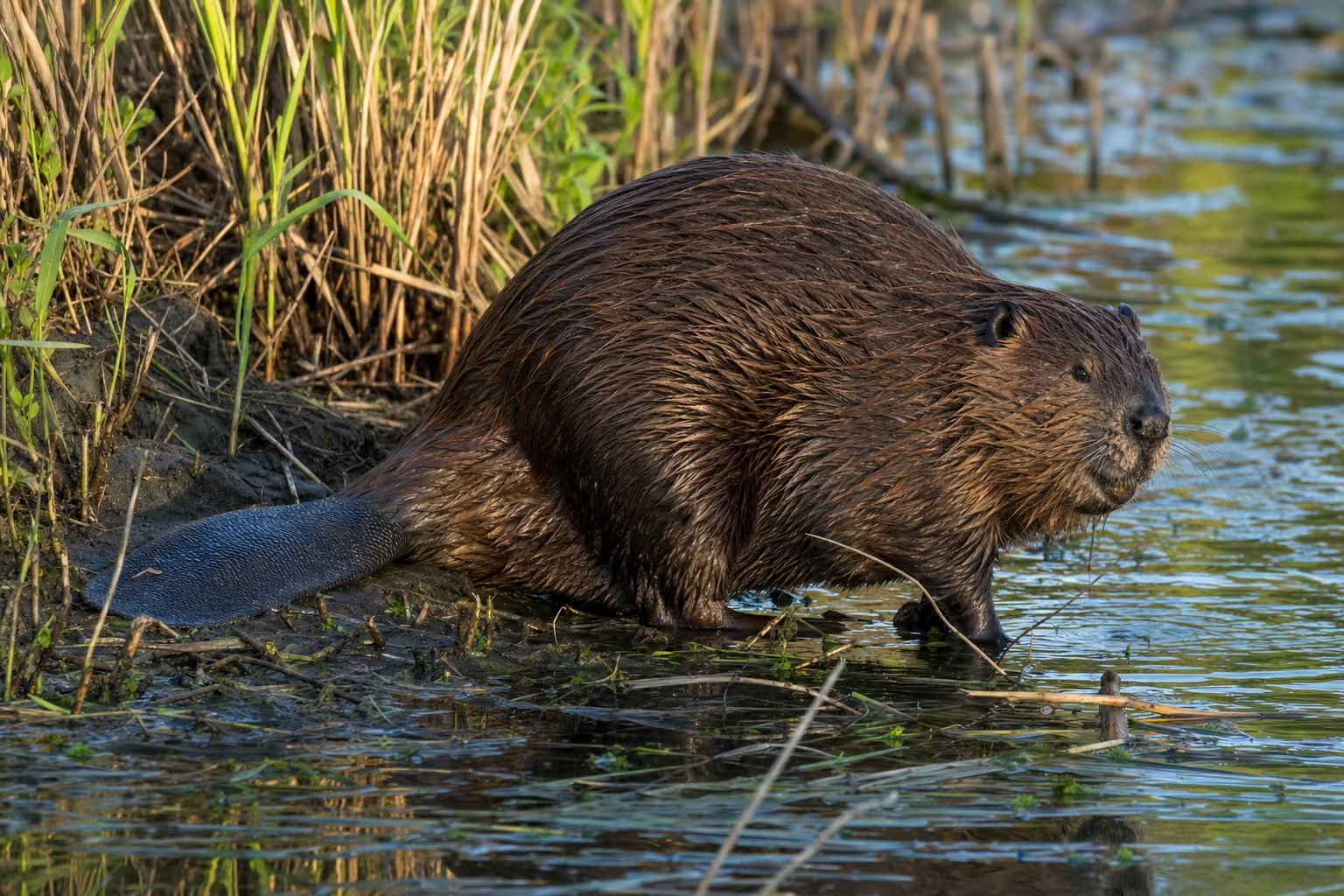
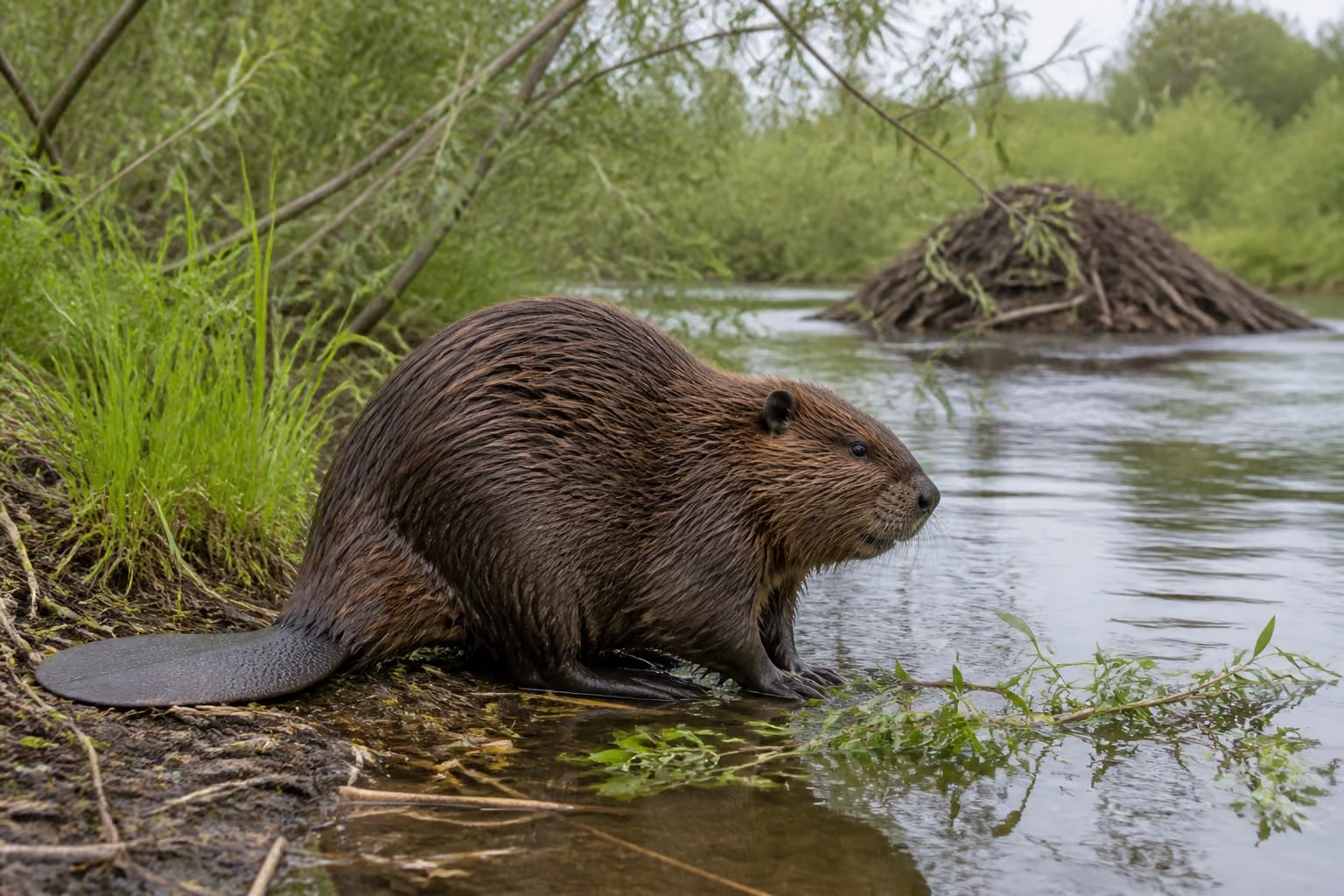
The North American beaver is a large rodent that cuts trees and builds dams and lodges. By reshaping water flow, it creates habitat for many other species.

View in catalog
Key facts

  • North American beaver (Castor canadensis) is a herbivore animal classified as Mammal · Rodentia · Castoridae.
  • Primary habitats are freshwater · forest, with a range across Nearctic.
  • Activity is nocturnal, sociality is pair, and conservation status is LC (Least Concern).
  • The North American beaver is a large rodent that cuts trees and builds dams and lodges.
  • It inhabits Nearctic rivers, ponds, lakes, wetlands, and nearby forest.
  • Typical lifespan: 10–20 years

Range

Habitat range map
Native rangeOccasional / Transient
NearcticNearcticNearcticNearcticNearcticNearcticNearcticNearcticNearcticNearcticNearcticNearcticNearcticNearcticNearcticNearcticNearcticNearcticNearcticNearcticNearcticNearcticNearcticNearcticNearcticNearcticNearcticNearcticNearcticNearcticNearcticNearcticNearcticNearcticNearcticNearcticNearcticNearcticNearcticNearcticNearctic

Map: Ecoregions 2017 © RESOLVE (CC BY 4.0) · Natural Earth (PD)

Details

Habitat

It inhabits Nearctic rivers, ponds, lakes, wetlands, and nearby forest. Suitable sites have woody food and water that can be deepened or stabilized.

Appearance

Length 74-90 cm; weight 11-32 kg. A flat scaly tail, webbed hind feet, waterproof brown fur, and large orange incisors are distinctive.

Behavior

Nocturnal and pair-living, it builds with branches and mud. Dams maintain water levels, and lodge entrances are kept underwater for protection.

Feeding

A herbivore, it eats bark, twigs, aquatic plants, and herbs. Branches may be stored underwater as winter food.

Reproduction

Pairs raise kits in the lodge, sometimes with older young remaining in the family group. Kits learn swimming and feeding along the pond edge.

Notes

It is listed as Least Concern. Once heavily reduced by the fur trade, it has recovered widely and acts as a major wetland engineer.