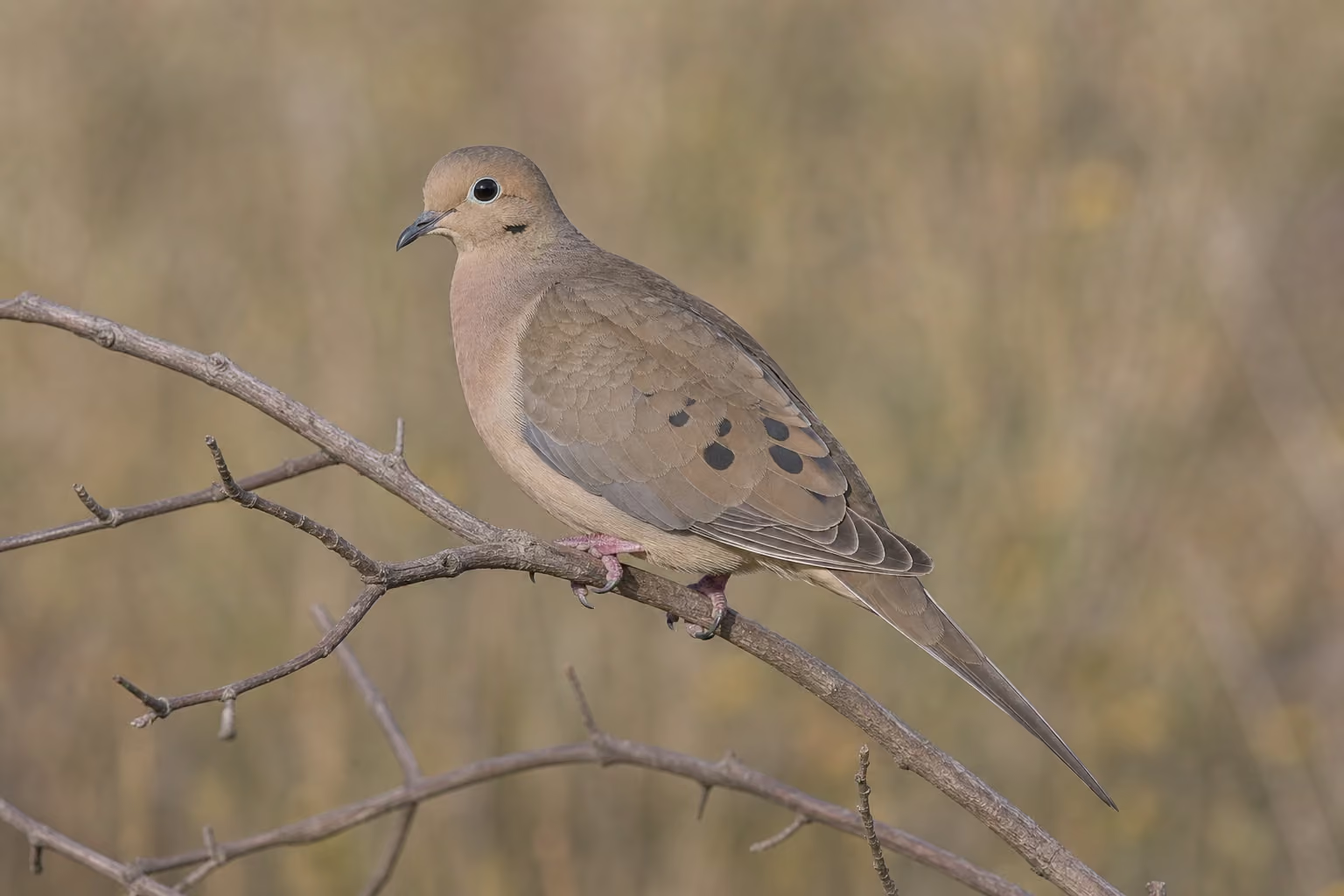
Mourning dove

Details

Mourning dove

Zenaida macroura

Size
23–34 cm · 96–170 g
Diet
Herbivore
Activity
Diurnal
Sociality
Loose group
Lifespan

A familiar slender dove of North America, recognized by its long pointed tail, soft brown-gray plumage, and mournful call.

View in catalog
Key facts

  • Mourning dove (Zenaida macroura) is a herbivore animal classified as Bird · Columbiformes · Columbidae.
  • Primary habitats are grassland · forest · desert · urban, with a range across Nearctic · Neotropical.
  • Activity is diurnal, sociality is loose group, and conservation status is LC (Least Concern).
  • A familiar slender dove of North America, recognized by its long pointed tail, soft brown-gray plumage, and mournful call.
  • Common in open woodland, grassland, farmland, desert edges, and suburbs where trees occur near open feeding ground.

Range

Habitat range map
Native rangeOccasional / Transient
NearcticNearcticNearcticNearcticNearcticNearcticNearcticNearcticNearcticNearcticNearcticNearcticNearcticNearcticNearcticNearcticNearcticNearcticNearcticNearcticNearcticNearcticNearcticNearcticNearcticNearcticNearcticNearcticNearcticNearcticNearcticNearcticNearcticNearcticNearcticNearcticNearcticNearcticNearcticNearcticNearcticNeotropicalNeotropicalNeotropicalNeotropicalNeotropicalNeotropicalNeotropicalNeotropical

Map: Ecoregions 2017 © RESOLVE (CC BY 4.0) · Natural Earth (PD)

Details

Habitat

Common in open woodland, grassland, farmland, desert edges, and suburbs where trees occur near open feeding ground.

Appearance

The body is slim and the tail long and pointed. Plumage is pale brown-gray with black wing spots and white tail edges in flight.

Behavior

It picks seeds from the ground and flies fast and direct on narrow wings. Pairs are common, and small flocks form outside breeding.

Feeding

Seeds of grasses, weeds, and crops make up most of the diet. Small stones are swallowed to grind food in the gizzard.

Reproduction

A shallow twig nest is built in trees or on structures. Both adults incubate and feed chicks with crop milk.

Notes

Abundant and widely hunted in North America, it remains low-risk, though lead shot and window strikes cause local mortality.