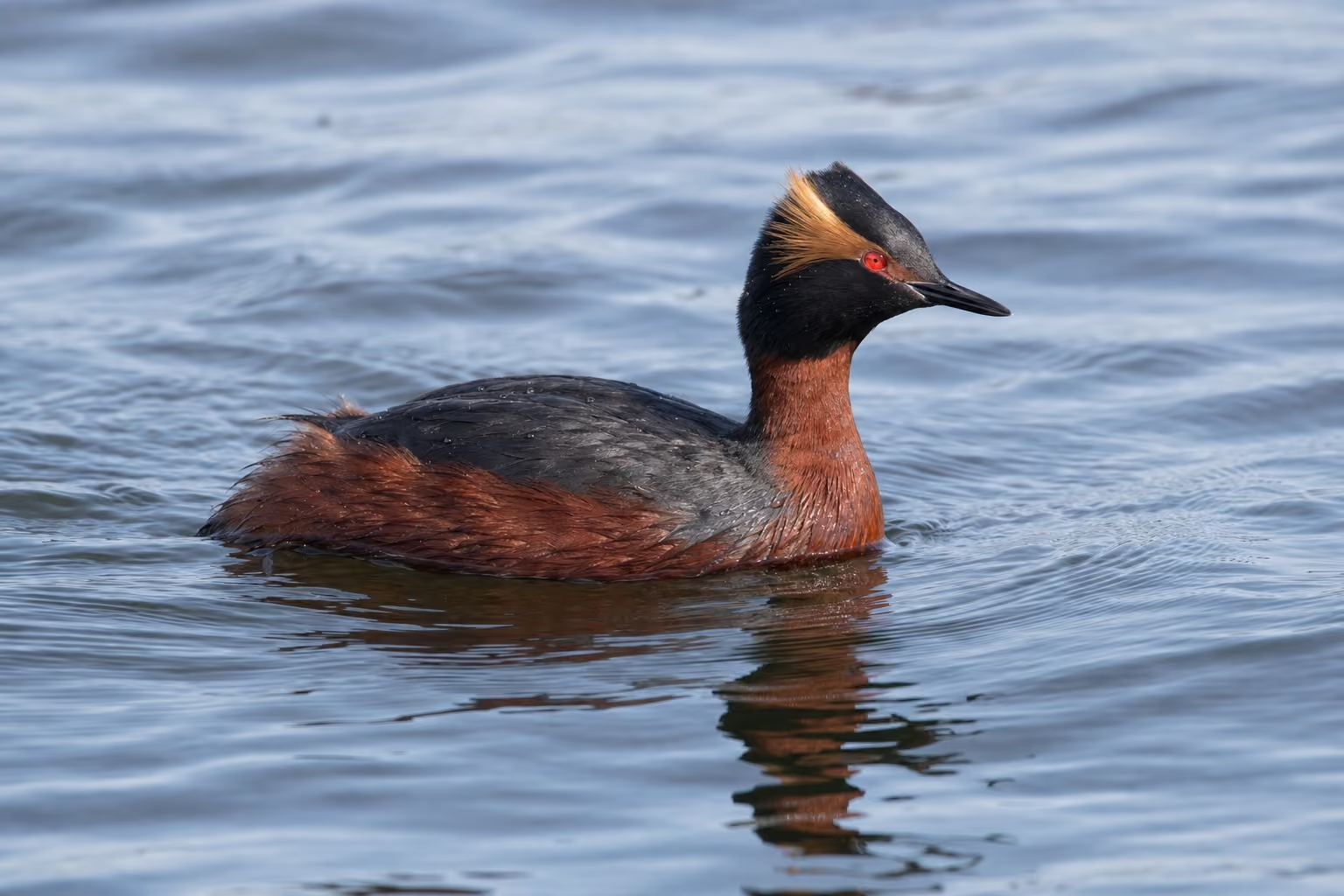
Horned grebe

Details

Horned grebe

Podiceps auritus

Size
31–38 cm · 300–570 g
Diet
Carnivore
Activity
Diurnal
Sociality
Pair
Lifespan
5–12 years

The horned grebe is a small diving waterbird with golden head plumes in breeding dress. Pairs breed on northern freshwater wetlands and many birds winter on coasts.

View in catalog
Key facts

  • Horned grebe (Podiceps auritus) is a carnivore animal classified as Bird · Podicipediformes · Podicipedidae.
  • Primary habitats are freshwater · coast, with a range across Palearctic · Nearctic.
  • Activity is diurnal, sociality is pair, and conservation status is VU (Vulnerable).
  • The horned grebe is a small diving waterbird with golden head plumes in breeding dress.
  • It breeds on marshes, ponds, and shallow lakes in the Palearctic and Nearctic, then uses sheltered bays and estuaries outside the breeding season.
  • Typical lifespan: 5–12 years

Range

Habitat range map
Native rangeOccasional / Transient
PalearcticPalearcticPalearcticPalearcticPalearcticPalearcticPalearcticPalearcticPalearcticPalearcticPalearcticPalearcticPalearcticPalearcticPalearcticPalearcticPalearcticPalearcticPalearcticPalearcticPalearcticPalearcticPalearcticPalearcticNearcticNearcticNearcticNearcticNearcticNearcticNearcticNearcticNearcticNearcticNearcticNearcticNearcticNearcticNearcticNearcticNearcticNearcticNearcticNearcticNearcticNearcticNearcticNearcticNearcticNearcticNearcticNearcticNearcticNearcticNearcticNearcticNearcticNearcticNearcticNearcticNearcticNearcticNearcticNearcticNearctic

Map: Ecoregions 2017 © RESOLVE (CC BY 4.0) · Natural Earth (PD)

Details

Habitat

It breeds on marshes, ponds, and shallow lakes in the Palearctic and Nearctic, then uses sheltered bays and estuaries outside the breeding season. Quiet vegetated water is favored.

Appearance

Length is 31-38 cm and weight 300-570 g. Breeding birds have a black head, golden ear-like plumes, and a reddish neck; winter plumage is pale grey and white.

Behavior

Diurnal pairs stay close during breeding. Strong diving ability lets them escape underwater rather than taking flight.

Feeding

A carnivore, it eats aquatic insects, crustaceans, small fish, and tadpoles. It swims underwater in pursuit of prey.

Reproduction

Pairs build floating nests from aquatic plants and share incubation. Chicks ride on the adults' backs before learning to dive for themselves.

Notes

It is listed as Vulnerable. Wetland degradation, changes to breeding ponds, oil pollution, and fishing nets in wintering areas are concerns.