Harbor porpoise

Details

Harbor porpoise

Phocoena phocoena

Size
1.4–1.9 m · 45–76 kg
Diet
Carnivore
Activity
Cathemeral
Sociality
Solitary
Lifespan
8–13 years

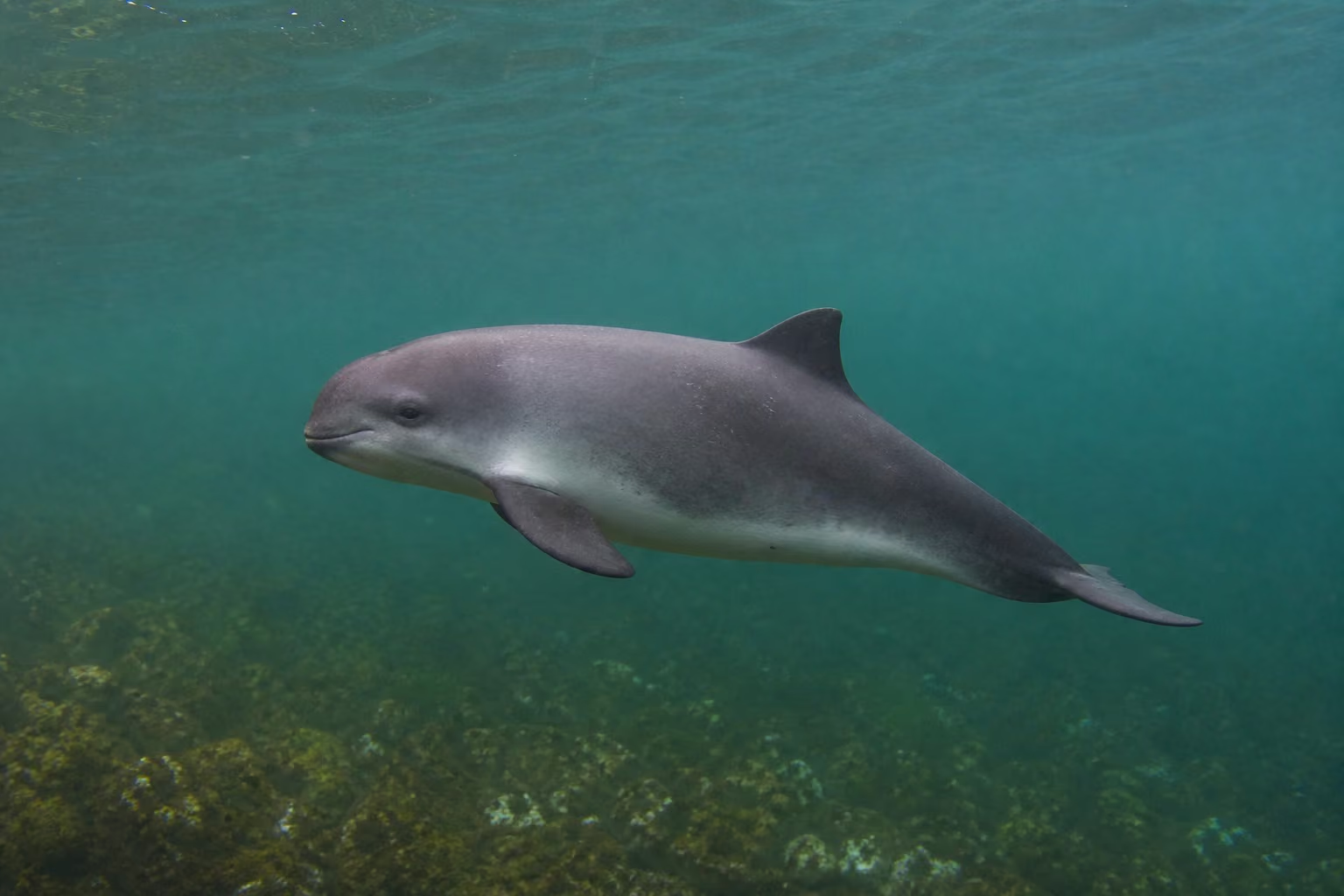
The harbor porpoise is a small cetacean of cool coastal waters. Quiet and inconspicuous, it usually travels alone or in small groups while hunting fish.

View in catalog
Key facts

  • Harbor porpoise (Phocoena phocoena) is a carnivore animal classified as Mammal · Artiodactyla · Phocoenidae.
  • Primary habitats are open ocean · coast, with a range across Atlantic Ocean · Pacific Ocean · Arctic Ocean.
  • Activity is cathemeral, sociality is solitary, and conservation status is LC (Least Concern).
  • The harbor porpoise is a small cetacean of cool coastal waters.
  • It lives in Atlantic, Pacific, and Arctic coastal waters and shallow offshore areas.
  • Typical lifespan: 8–13 years

Range

Habitat range map
Native rangeOccasional / Transient
Pacific OceanPacific OceanPacific OceanAtlantic OceanAtlantic OceanAtlantic OceanAtlantic OceanAtlantic OceanArctic OceanArctic OceanArctic Ocean

Map: Ecoregions 2017 © RESOLVE (CC BY 4.0) · Natural Earth (PD)

Details

Habitat

It lives in Atlantic, Pacific, and Arctic coastal waters and shallow offshore areas. Bays, straits, and continental shelves with abundant prey are important.

Appearance

Length 140-190 cm; weight 45-76 kg. It has a blunt head with no obvious beak and a small triangular dorsal fin. The back is dark grey and the underside pale.

Behavior

Cathemeral and often solitary, it surfaces briefly and dives with little splash. It rarely performs the high leaps associated with many dolphins.

Feeding

A carnivore, it eats small schooling fish, squid, and bottom fishes. Echolocation guides repeated short dives in shallow seas.

Reproduction

Females bear a single calf and nurse it in coastal waters. Calves follow mothers while learning to dive and forage.

Notes

It is listed as Least Concern, but bycatch in gillnets is a serious local threat. Coastal noise and pollution can also affect populations.