Guinea pig

Details

Guinea pig

Cavia porcellus

Size
20–40 cm · 0.7–1.2 kg
Diet
Herbivore
Activity
Diurnal
Sociality
Social
Lifespan

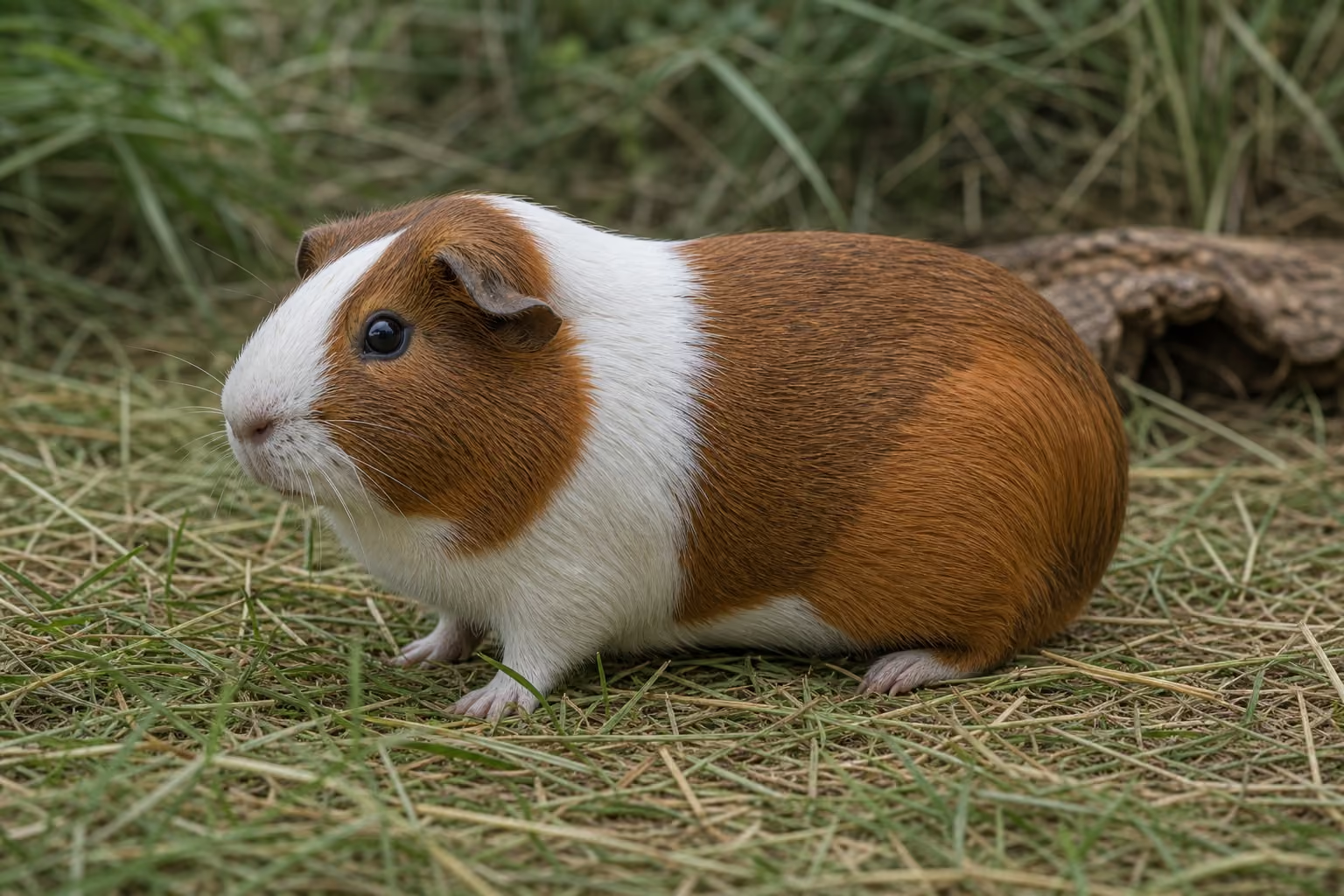
A domesticated cavy with roots in the Andes. Its rounded body, short legs, vocal social behavior, and long history with people make it familiar worldwide.

View in catalog
Key facts

  • Guinea pig (Cavia porcellus) is a herbivore animal classified as Mammal · Rodentia · Caviidae.
  • Primary habitats are grassland · mountains · urban, with a range across Neotropical.
  • Activity is diurnal, sociality is social, and conservation status is LC (Least Concern).
  • A domesticated cavy with roots in the Andes.
  • Wild relatives live in South American grassland and shrubland.

Range

Habitat range map
Native rangeOccasional / Transient
NeotropicalNeotropicalNeotropicalNeotropicalNeotropicalNeotropicalNeotropicalNeotropical

Map: Ecoregions 2017 © RESOLVE (CC BY 4.0) · Natural Earth (PD)

Details

Habitat

Wild relatives live in South American grassland and shrubland. Domestic guinea pigs mainly occur under human care rather than as broad wild populations.

Appearance

They have a compact body, rounded ears, and almost no visible tail. Coat color, length, and texture vary widely among domestic breeds.

Behavior

They are social and use many calls to signal alarm, contact, and expectation. They prefer cover and quickly retreat when startled.

Feeding

They feed on grasses, leafy plants, vegetables, and hay. Because they cannot make enough vitamin C, they need it regularly in the diet.

Reproduction

Gestation is relatively long for a rodent, and young are born furred, open-eyed, and mobile. They begin nibbling solid food soon after birth.

Notes

The species has been important as food, a laboratory animal, and a companion animal in different cultural settings.