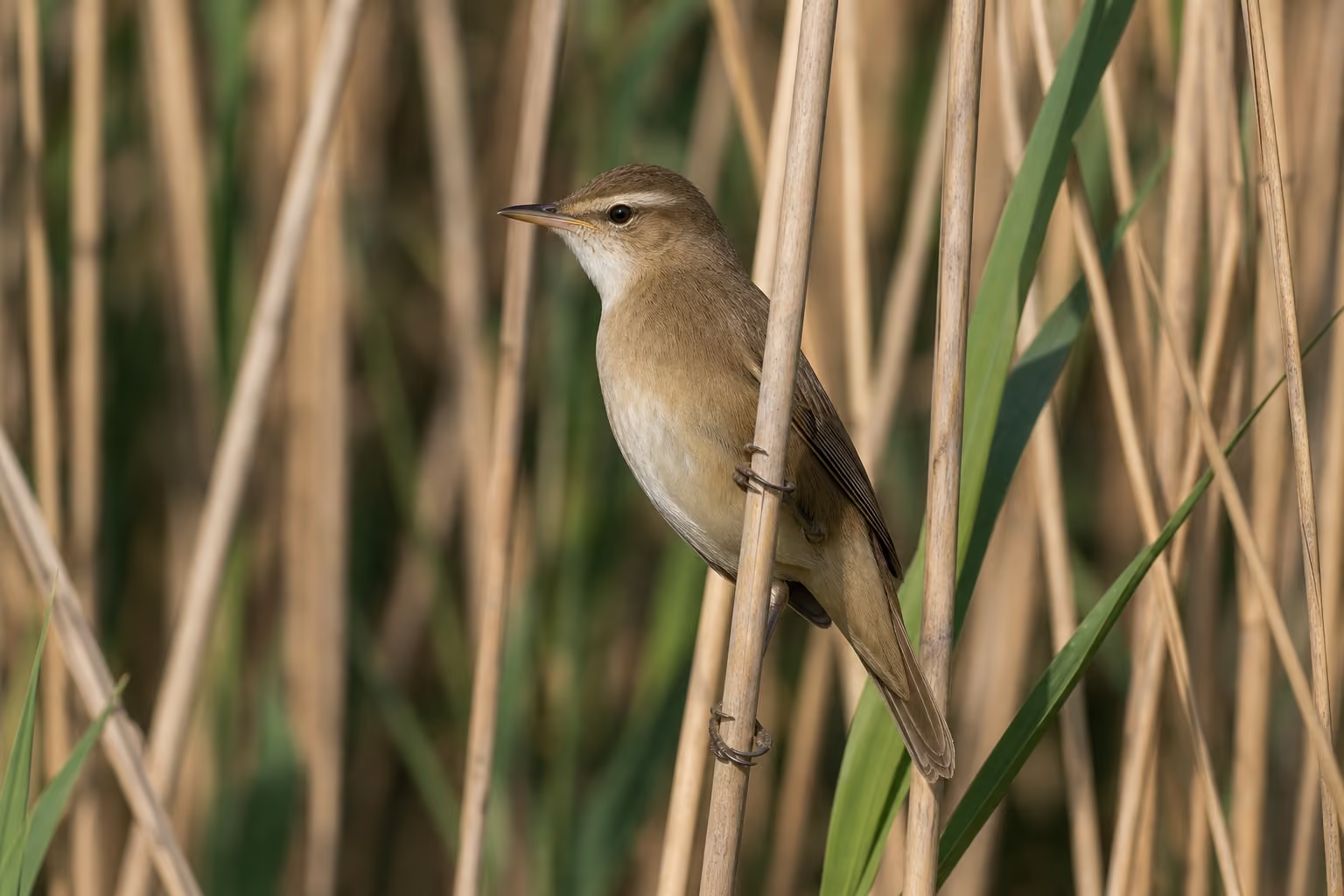
Great reed warbler

Details

Great reed warbler

Acrocephalus arundinaceus

Size
16–20 cm · 22–38 g
Diet
Carnivore
Activity
Diurnal
Sociality
Solitary
Lifespan

A large reed warbler with a strong voice, long body, and stout bill, often singing from reed stems.

View in catalog
Key facts

  • Great reed warbler (Acrocephalus arundinaceus) is a carnivore animal classified as Bird · Passeriformes · Acrocephalidae.
  • Primary habitats are freshwater · grassland, with a range across Palearctic · Afrotropical · Indomalayan.
  • Activity is diurnal, sociality is solitary, and conservation status is LC (Least Concern).
  • A large reed warbler with a strong voice, long body, and stout bill, often singing from reed stems.
  • Breeds in reedbeds along lakes, rivers, marshes, and canals; migrants also use scrub, rice fields, and wet woodland edges.

Range

Habitat range map
Native rangeOccasional / Transient
PalearcticPalearcticPalearcticPalearcticPalearcticPalearcticPalearcticPalearcticPalearcticPalearcticPalearcticPalearcticPalearcticPalearcticPalearcticPalearcticPalearcticPalearcticPalearcticPalearcticPalearcticPalearcticPalearcticPalearcticAfrotropicalAfrotropicalAfrotropicalAfrotropicalIndomalayanIndomalayanIndomalayanIndomalayanIndomalayanIndomalayanIndomalayanIndomalayanIndomalayanIndomalayanIndomalayanIndomalayanIndomalayanIndomalayanIndomalayan

Map: Ecoregions 2017 © RESOLVE (CC BY 4.0) · Natural Earth (PD)

Details

Habitat

Breeds in reedbeds along lakes, rivers, marshes, and canals; migrants also use scrub, rice fields, and wet woodland edges.

Appearance

Brown upperparts, pale underparts, and a pale eyebrow mark are typical. It is large and heavy-billed for a reed warbler.

Behavior

Males sing loud, harsh phrases from tall reed stems and move vertically while gripping reeds.

Feeding

Insects, spiders, small crustaceans, and larvae are taken within waterside vegetation.

Reproduction

Deep cup nests are woven onto reed stems, with breeding success tied to water level and reedbed condition.

Notes

A widespread migrant, it is affected locally by reed cutting schedules and wetland alteration.