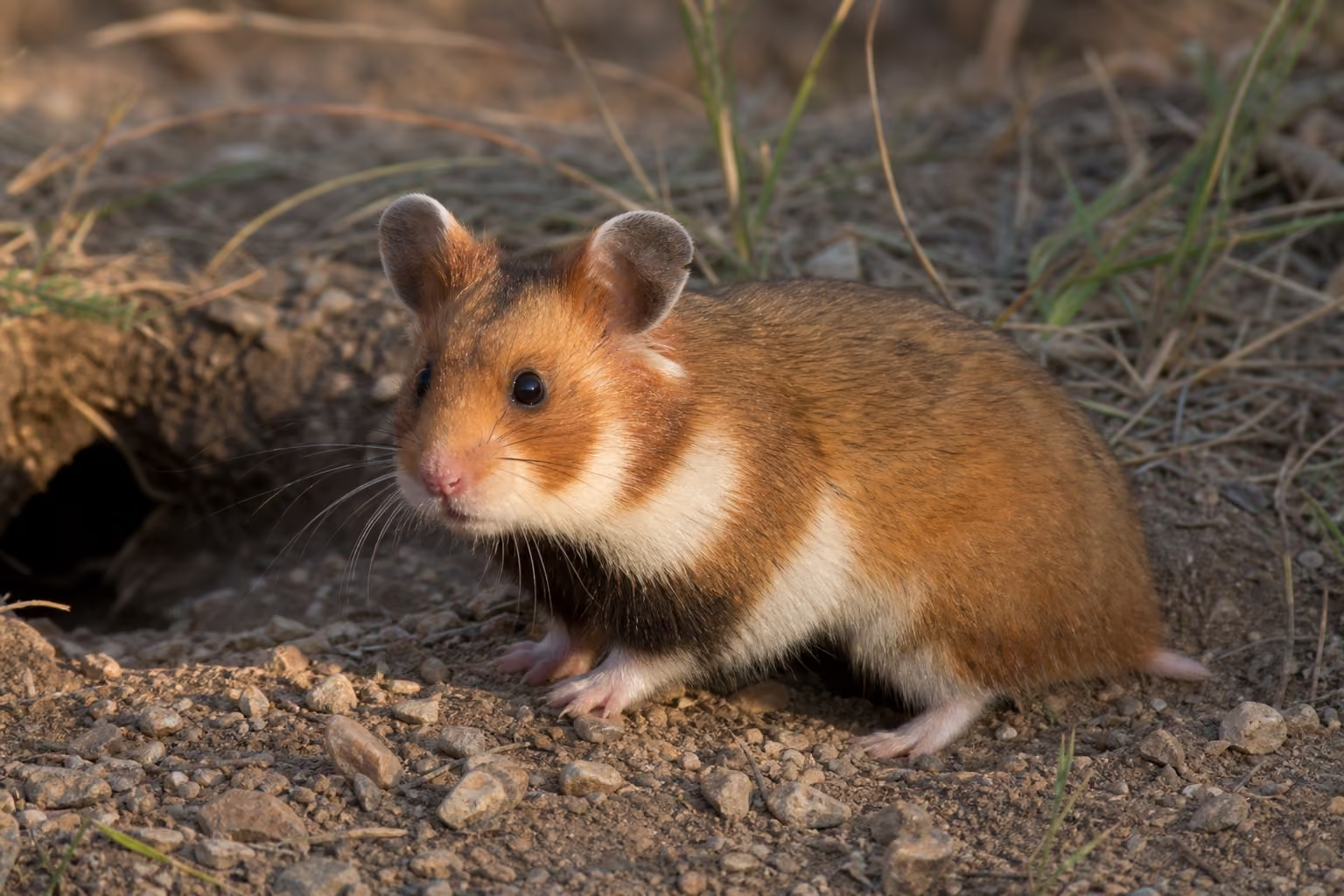
Golden hamster

Details

Golden hamster

Mesocricetus auratus

Size
13–18 cm · 100–180 g
Diet
Omnivore
Activity
Nocturnal
Sociality
Solitary
Lifespan

A wild hamster of dry farmland around northern Syria, while domesticated descendants are kept worldwide.

View in catalog
Key facts

  • Golden hamster (Mesocricetus auratus) is an omnivore animal classified as Mammal · Rodentia · Cricetidae.
  • Primary habitats are grassland · desert · urban, with a range across Palearctic.
  • Activity is nocturnal, sociality is solitary, and conservation status is VU (Vulnerable).
  • A wild hamster of dry farmland around northern Syria, while domesticated descendants are kept worldwide.
  • Burrows in dry fields, steppe, and rural soils, with the natural range limited to parts of northern Syria and southern Turkey.

Range

Habitat range map
Native rangeOccasional / Transient
PalearcticPalearcticPalearcticPalearcticPalearcticPalearcticPalearcticPalearcticPalearcticPalearcticPalearcticPalearcticPalearcticPalearcticPalearcticPalearcticPalearcticPalearcticPalearcticPalearcticPalearcticPalearcticPalearcticPalearctic

Map: Ecoregions 2017 © RESOLVE (CC BY 4.0) · Natural Earth (PD)

Details

Habitat

Burrows in dry fields, steppe, and rural soils, with the natural range limited to parts of northern Syria and southern Turkey.

Appearance

Wild-type animals have golden-brown upperparts, pale underparts, rounded ears, a short tail, and large cheek pouches.

Behavior

Nocturnal and solitary, it stores food in burrows. Seeds are packed into cheek pouches and carried to storage chambers.

Feeding

Seeds, grain, herbs, roots, fruit, and insects are eaten, with crop seeds used in farmland.

Reproduction

Litters are born in burrows. Development is rapid, and captive animals can breed at short intervals.

Notes

The wild range is narrow and affected by farmland change and collection pressure, so it is treated as Vulnerable.