Firebug

Details

Firebug

Pyrrhocoris apterus

Size
0.9–1.2 cm · 0–0 g
Diet
Herbivore
Activity
Diurnal
Sociality
Loose group
Lifespan
less than 1 year

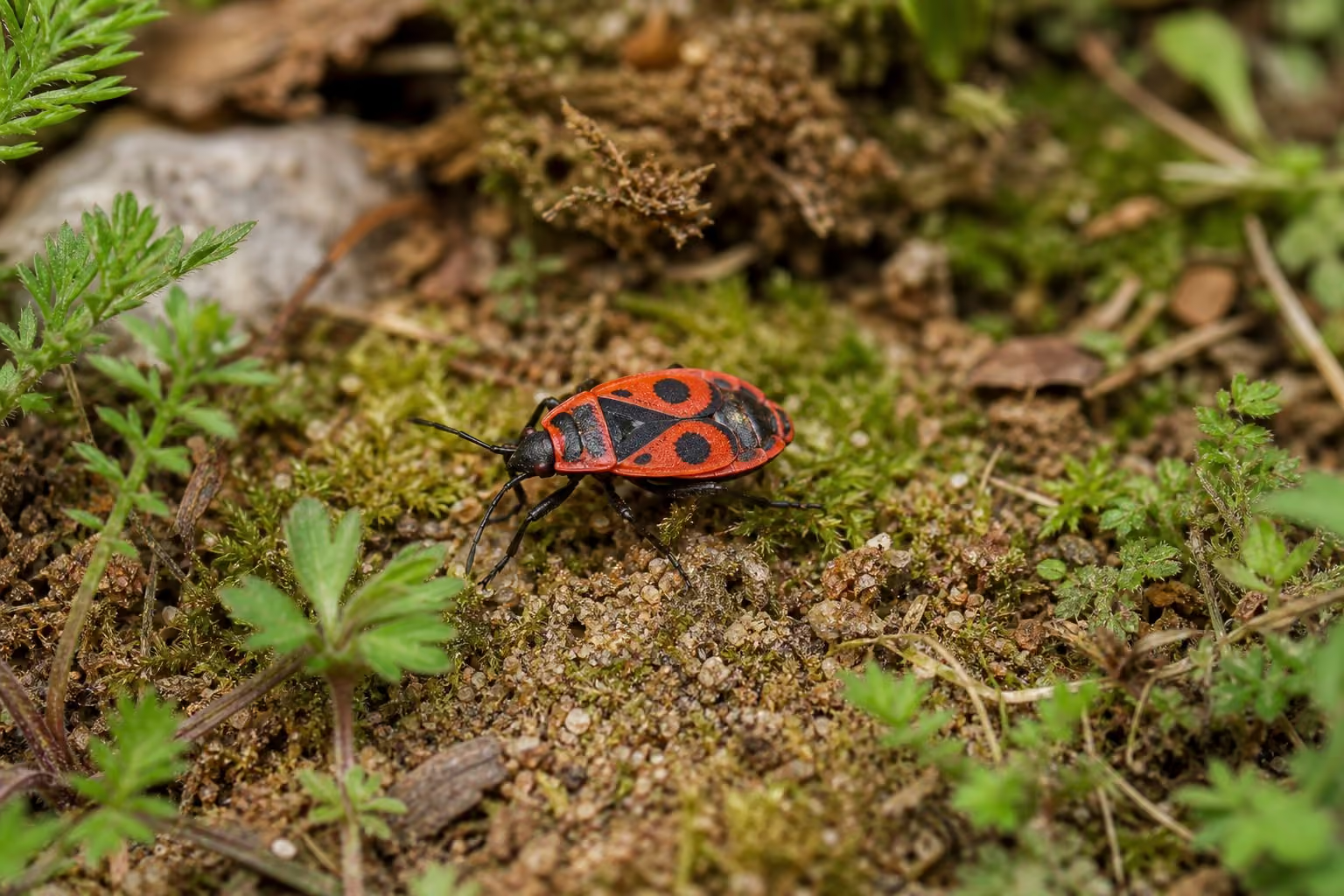
The firebug is a ground-dwelling true bug marked in red and black. It gathers by day and sucks juices from seeds and fruits.

View in catalog
Key facts

  • Firebug (Pyrrhocoris apterus) is a herbivore animal classified as Invertebrate · Hemiptera · Pyrrhocoridae.
  • Primary habitats are forest · grassland · urban, with a range across Palearctic.
  • Activity is diurnal, sociality is loose group, and conservation status is LC (Least Concern).
  • The firebug is a ground-dwelling true bug marked in red and black.
  • It lives in woodland edges, grassland, and urban parks across the Palearctic.
  • Typical lifespan: less than 1 year

Range

Habitat range map
Native rangeOccasional / Transient
PalearcticPalearcticPalearcticPalearcticPalearcticPalearcticPalearcticPalearcticPalearcticPalearcticPalearcticPalearcticPalearcticPalearcticPalearcticPalearcticPalearcticPalearcticPalearcticPalearcticPalearcticPalearcticPalearcticPalearctic

Map: Ecoregions 2017 © RESOLVE (CC BY 4.0) · Natural Earth (PD)

Details

Habitat

It lives in woodland edges, grassland, and urban parks across the Palearctic. Sunny ground near lime trees and mallows is often used.

Appearance

Length 0.9-1.2 cm; weight 0.01 g-0.04 g. A red body with black markings creates a bold warning-like pattern. Many individuals have shortened wings and limited flight.

Behavior

Diurnal and loosely gregarious, it clusters in sunny places. Groups may overwinter together in leaf litter or crevices.

Feeding

A herbivore, it sucks fluids from fallen seeds, fruits, and plant tissues. Seeds of lime trees and mallows are common foods.

Reproduction

Mating occurs from spring into early summer, and females lay eggs near the ground. Nymphs resemble small adults and gain stronger red-black patterning as they molt.

Notes

It is listed as Least Concern, though local populations can still be affected by habitat change, collection, or pollution.