Emperor angelfish

Details

Emperor angelfish

Pomacanthus imperator

Size
30–40 cm · 1–2 kg
Diet
Omnivore
Activity
Diurnal
Sociality
Solitary
Lifespan
15–20 years

The emperor angelfish is a large reef angelfish of the Indian and Pacific Oceans. It is famous for the striking difference between juvenile and adult patterns.

View in catalog
Key facts

  • Emperor angelfish (Pomacanthus imperator) is an omnivore animal classified as Fish · Acanthuriformes · Pomacanthidae.
  • Primary habitats are coral reef · open ocean, with a range across Pacific Ocean · Indian Ocean.
  • Activity is diurnal, sociality is solitary, and conservation status is LC (Least Concern).
  • The emperor angelfish is a large reef angelfish of the Indian and Pacific Oceans.
  • It uses coral reefs, outer reef slopes, lagoons, and rocky reef areas of the Indo-Pacific.
  • Typical lifespan: 15–20 years

Range

Habitat range map
Native rangeOccasional / Transient
Pacific OceanPacific OceanPacific OceanIndian Ocean

Map: Ecoregions 2017 © RESOLVE (CC BY 4.0) · Natural Earth (PD)

Details

Habitat

It uses coral reefs, outer reef slopes, lagoons, and rocky reef areas of the Indo-Pacific. Adults often live alone on complex reefs with holes and overhangs.

Appearance

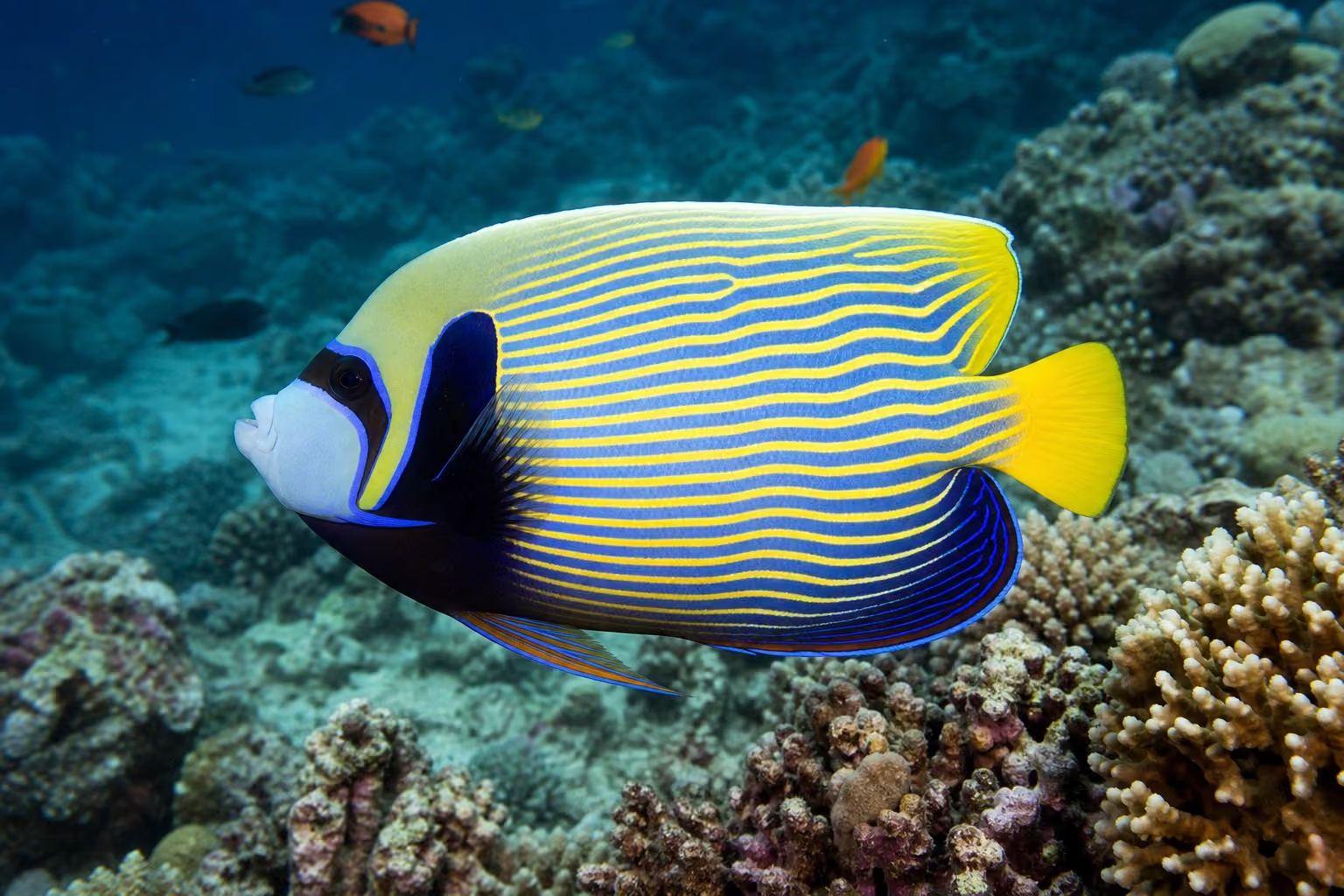
Length is 30-40 cm and weight 1-2 kg. Adults show yellow and blue horizontal stripes, a dark eye band, and blue edging; juveniles are black with white and blue swirls.

Behavior

Diurnal and solitary, it patrols a reef territory. Adults stay near cover and may drive away other emperor angelfish.

Feeding

An omnivore, it eats sponges, tunicates, algae, and small invertebrates. It picks and scrapes attached organisms from hard reef surfaces.

Reproduction

Pairs rise into the water column during spawning and release eggs and sperm. Eggs and larvae drift before juveniles settle back to reefs.

Notes

It is listed as Least Concern. Popular in the aquarium trade, it depends on healthy reefs with complex shelter.