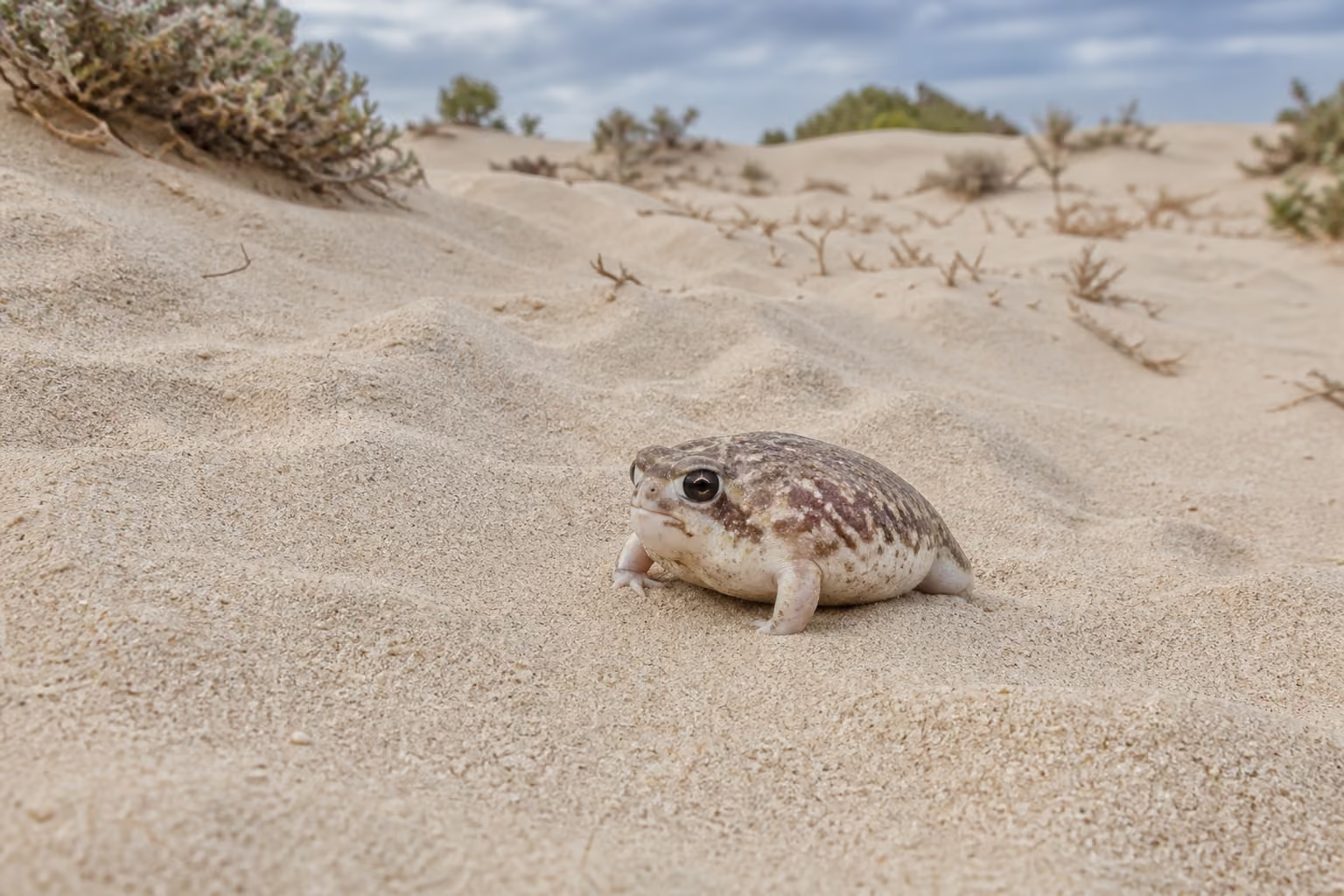
Desert rain frog

Details

Desert rain frog

Breviceps macrops

Size
4–6 cm · 8–18 g
Diet
Carnivore
Activity
Nocturnal
Sociality
Solitary
Lifespan
4–10 years

The desert rain frog is a round-bodied frog of Afrotropical desert and coastal habitats. It is a solitary nocturnal carnivore.

View in catalog
Key facts

  • Desert rain frog (Breviceps macrops) is a carnivore animal classified as Amphibian · Anura · Brevicipitidae.
  • Primary habitats are desert · coast, with a range across Afrotropical.
  • Activity is nocturnal, sociality is solitary, and conservation status is NT (Near Threatened).
  • The desert rain frog is a round-bodied frog of Afrotropical desert and coastal habitats.
  • It lives in coastal dunes and dry sandy ground.
  • Typical lifespan: 4–10 years

Range

Habitat range map
Native rangeOccasional / Transient
AfrotropicalAfrotropicalAfrotropicalAfrotropical

Map: Ecoregions 2017 © RESOLVE (CC BY 4.0) · Natural Earth (PD)

Details

Habitat

It lives in coastal dunes and dry sandy ground. Fog and damp sand support it, and by day it burrows to avoid drying out.

Appearance

Body length is about 4-6 cm and weight about 8-18 g. A round body, short legs, and bulging eyes suit a sand-burrowing life.

Behavior

It is nocturnal and solitary. On humid nights it emerges from sand, and when startled it may give a high-pitched call.

Feeding

It is carnivorous, eating small insects and sandy-ground invertebrates. It searches for moving prey near the surface.

Reproduction

It is known for direct development, with young hatching as tiny frogs rather than free-swimming tadpoles. Damp sand is important.

Notes

Its conservation status is NT. Dependence on coastal dunes makes habitat change a concern.