Details
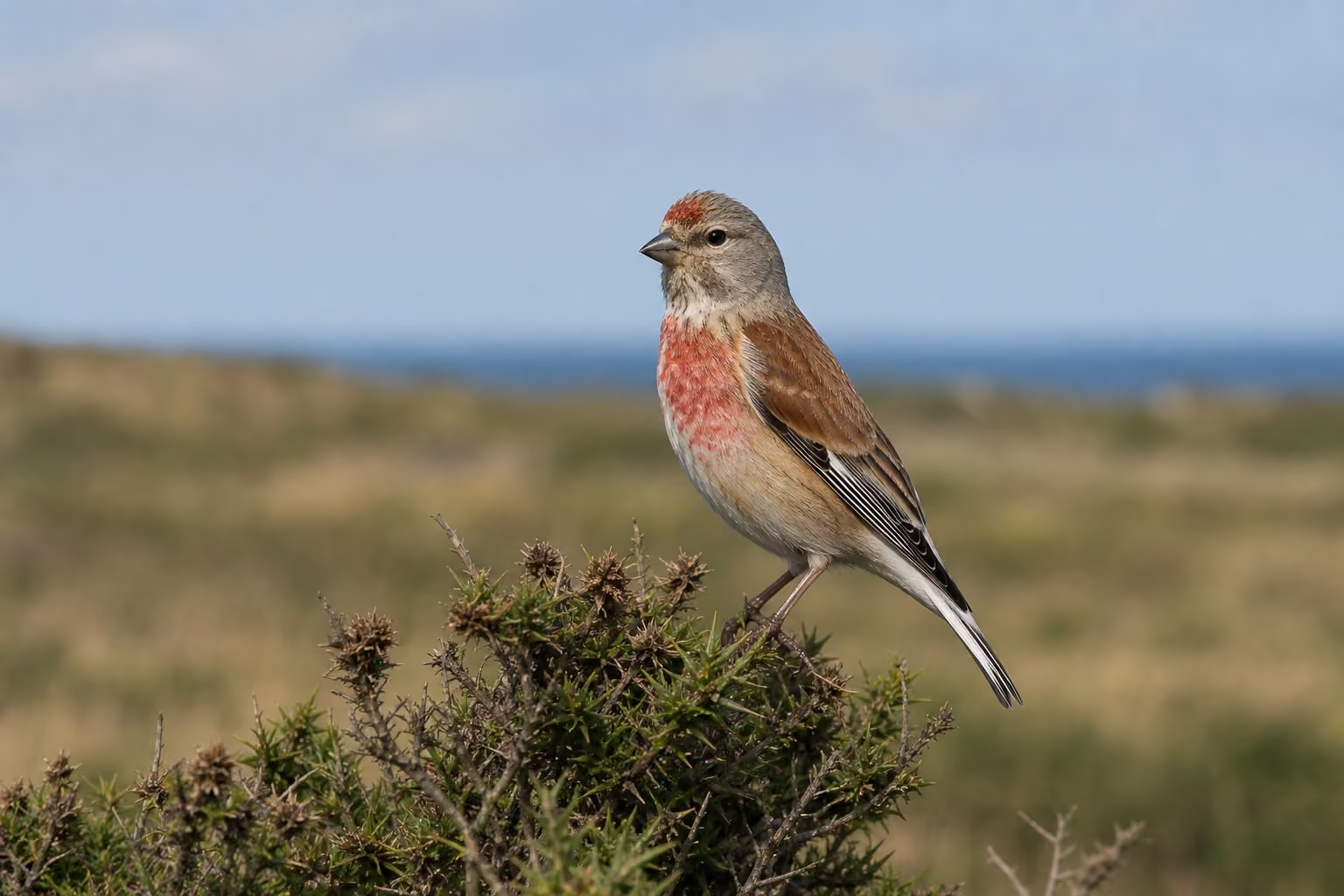
Common linnet
Linaria cannabina
- Size
- 13–14 cm · 15–22 g
- Diet
- Herbivore
- Activity
- Diurnal
- Sociality
- Herd
- Lifespan
- —
A slim finch with a fairly long tail; breeding males show red on the breast and forehead.
View in catalogDetails
Linaria cannabina
A slim finch with a fairly long tail; breeding males show red on the breast and forehead.
View in catalogMap: Ecoregions 2017 © RESOLVE (CC BY 4.0) · Natural Earth (PD)
Uses scrub, rough ground, field edges, hedges, coastal grassland, and young plantations with many seed-bearing plants.
Breeding males have red forehead and breast with chestnut upperparts. Females and winter birds are browner and streaked.
Outside breeding, flocks move through grassland and fields. Flight is bounding, and songs are light and continuous.
Seeds of herbs and weeds, plus buds, dominate the diet. Chicks also receive many seeds.
Small cup nests are built low in shrubs or hedges, requiring open feeding areas close to cover.
Because it depends on farmland weed seeds, local populations can fall when agricultural management removes seed sources.