Common garter snake

Details

Common garter snake

Thamnophis sirtalis

Size
Total length 0.5–1.4 m · 30–150 g
Diet
Carnivore
Activity
Diurnal
Sociality
Solitary
Lifespan
4–10 years

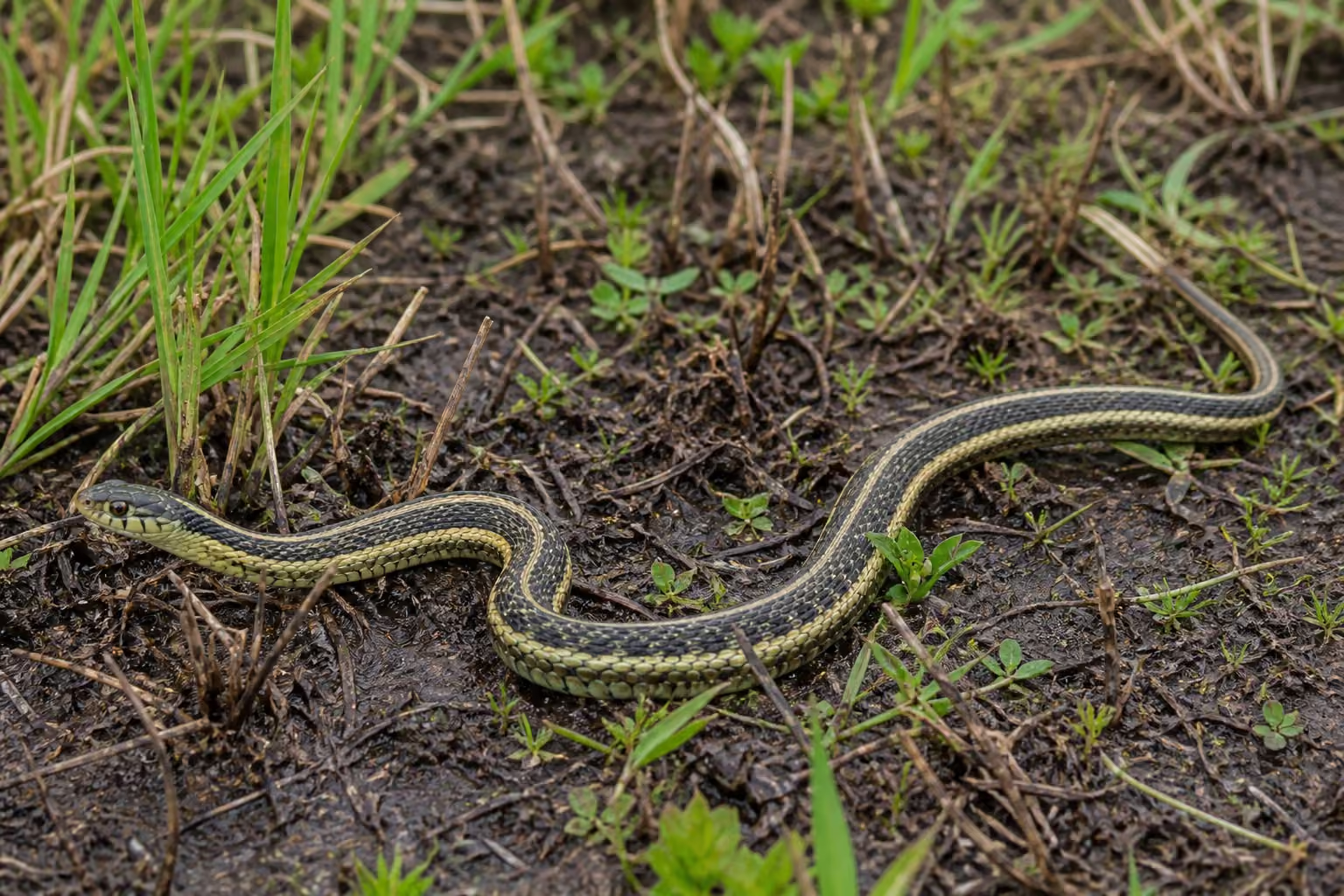
The common garter snake is a slender, widespread North American snake. It is often seen by day in wetlands, gardens, and grassy edges.

View in catalog
Key facts

  • Common garter snake (Thamnophis sirtalis) is a carnivore animal classified as Reptile · Squamata · Colubridae.
  • Primary habitats are grassland · freshwater · forest · urban, with a range across Nearctic.
  • Activity is diurnal, sociality is solitary, and conservation status is LC (Least Concern).
  • The common garter snake is a slender, widespread North American snake.
  • It inhabits Nearctic grassland, freshwater edges, forest, and urban areas.
  • Typical lifespan: 4–10 years

Range

Habitat range map
Native rangeOccasional / Transient
NearcticNearcticNearcticNearcticNearcticNearcticNearcticNearcticNearcticNearcticNearcticNearcticNearcticNearcticNearcticNearcticNearcticNearcticNearcticNearcticNearcticNearcticNearcticNearcticNearcticNearcticNearcticNearcticNearcticNearcticNearcticNearcticNearcticNearcticNearcticNearcticNearcticNearcticNearcticNearcticNearctic

Map: Ecoregions 2017 © RESOLVE (CC BY 4.0) · Natural Earth (PD)

Details

Habitat

It inhabits Nearctic grassland, freshwater edges, forest, and urban areas. Damp grass, pond margins, stream banks, and garden cover are common sites.

Appearance

Total length 46-137 cm; weight 30-150 g. A slim body carries lengthwise stripes, with colors ranging from greenish brown to black. The head is small and the snake is quick-moving.

Behavior

Diurnal and usually solitary, it may gather in large numbers at winter dens in cold regions. It escapes quickly into cover when disturbed.

Feeding

A carnivore, it eats earthworms, frogs, small fish, salamanders, and small invertebrates. It forages both on land and at the water's edge.

Reproduction

It gives birth to live young rather than laying eggs. Newborns immediately hunt small prey on their own.

Notes

It is listed as Least Concern. As a common backyard and wetland predator, it helps regulate small animal populations.