Capybara

Details

Capybara

Hydrochoerus hydrochaeris

Size
1–1.3 m · 35–66 kg
Diet
Herbivore
Activity
Cathemeral
Sociality
Herd
Lifespan
10-20 years

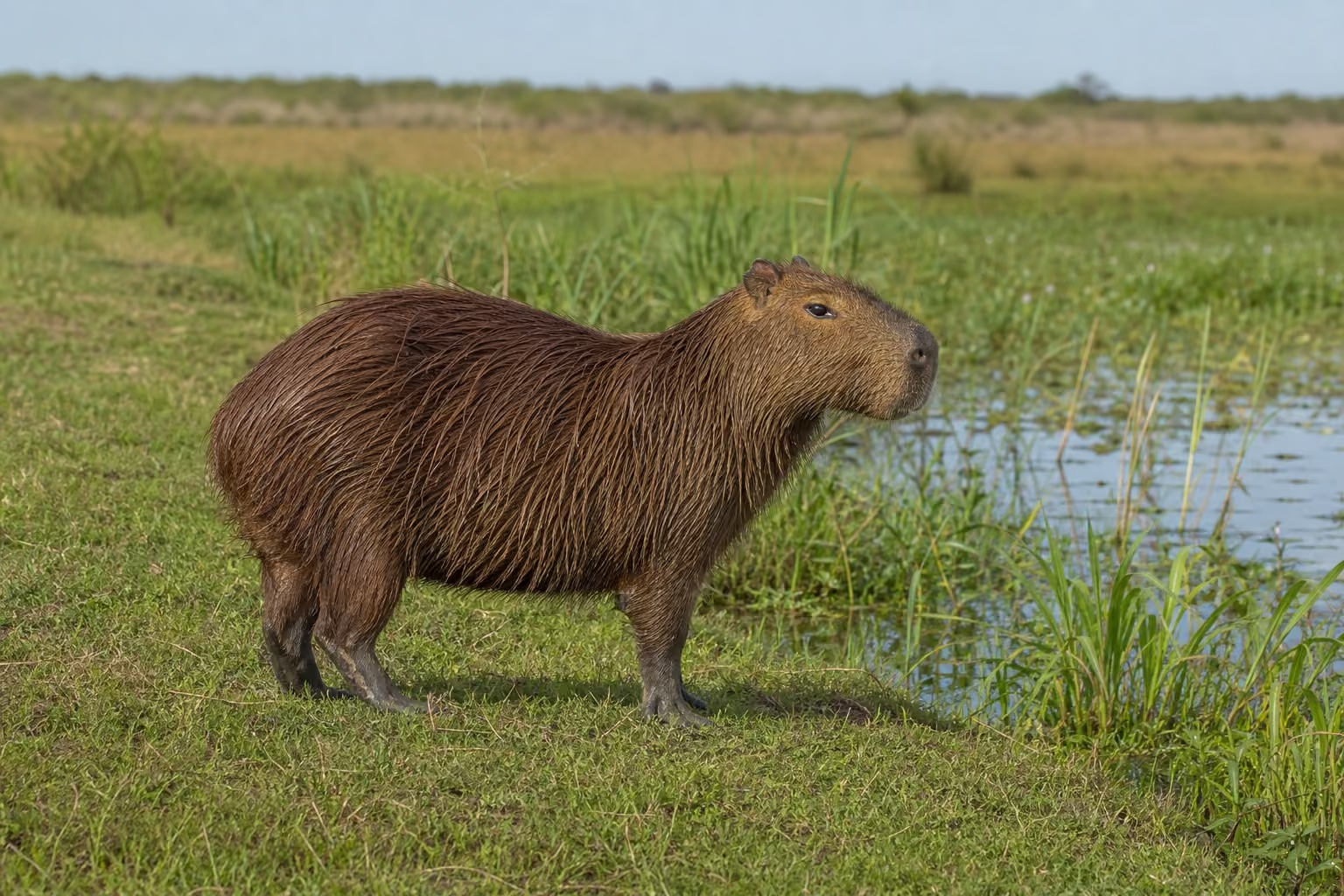
The capybara is a large South American rodent of wetlands and grasslands. It is cathemeral and moves in herds along the water's edge.

View in catalog
Key facts

  • Capybara (Hydrochoerus hydrochaeris) is a herbivore animal classified as Mammal · Rodentia · Caviidae.
  • Primary habitats are freshwater · grassland, with a range across Neotropical.
  • Activity is cathemeral, sociality is herd, and conservation status is LC (Least Concern).
  • The capybara is a large South American rodent of wetlands and grasslands.
  • It favors grassy areas close to rivers, marshes, ponds, and other freshwater.
  • Typical lifespan: 10-20 years

Range

Habitat range map
Native rangeOccasional / Transient
NeotropicalNeotropicalNeotropicalNeotropicalNeotropicalNeotropicalNeotropicalNeotropical

Map: Ecoregions 2017 © RESOLVE (CC BY 4.0) · Natural Earth (PD)

Details

Habitat

It favors grassy areas close to rivers, marshes, ponds, and other freshwater. Water provides escape cover, cooling, and access to feeding sites.

Appearance

Body length is about 100-134 cm and weight about 35-66 kg. A barrel-shaped body, short legs, and high-set eyes and nostrils suit a semiaquatic life.

Behavior

Its activity pattern is flexible, with resting in shade or water during heat. Herds stay alert and often retreat into water when disturbed.

Feeding

It is herbivorous, feeding on grasses, aquatic plants, and leaves near water. Long feeding periods help it process tough plant material.

Reproduction

Young are born well developed and can move with the herd soon after birth. Several adults may remain near them in the group setting.

Notes

Its status is listed as Least Concern. It is a characteristic large grazer of wet grasslands and often lives close to people in some regions.