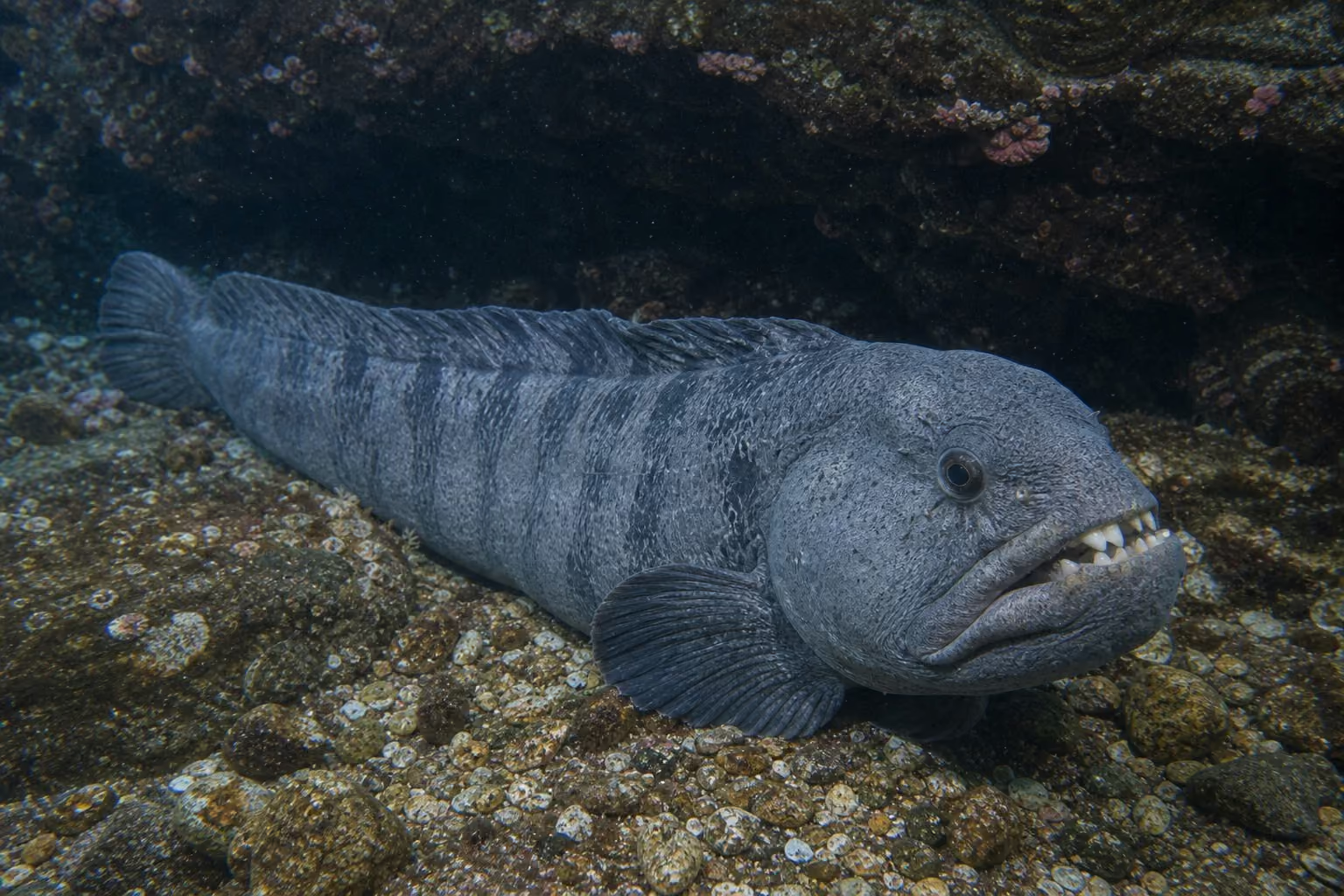
Atlantic wolffish

Details

Atlantic wolffish

Anarhichas lupus

Size
0.5–1.5 m · 3–23.5 kg
Diet
Carnivore
Activity
Cathemeral
Sociality
Solitary
Lifespan

A large cold-water bottom fish of the North Atlantic, using powerful jaws to crush sea urchins, crabs, and mollusks.

View in catalog
Key facts

  • Atlantic wolffish (Anarhichas lupus) is a carnivore animal classified as Fish · Perciformes · Anarhichadidae.
  • Primary habitats are open ocean · coast, with a range across Atlantic Ocean · Arctic Ocean · Nearctic · Palearctic.
  • Activity is cathemeral, sociality is solitary, and conservation status is VU (Vulnerable).
  • A large cold-water bottom fish of the North Atlantic, using powerful jaws to crush sea urchins, crabs, and mollusks.
  • Lives on rocky, gravelly, and cold shelf bottoms from eastern Canada and Greenland to Iceland and northern Europe.

Range

Habitat range map
Native rangeOccasional / Transient
Atlantic OceanAtlantic OceanAtlantic OceanAtlantic OceanAtlantic OceanArctic OceanArctic OceanArctic OceanPalearcticPalearcticPalearcticPalearcticPalearcticPalearcticPalearcticPalearcticPalearcticPalearcticPalearcticPalearcticPalearcticPalearcticPalearcticPalearcticPalearcticPalearcticPalearcticPalearcticPalearcticPalearcticPalearcticPalearcticNearcticNearcticNearcticNearcticNearcticNearcticNearcticNearcticNearcticNearcticNearcticNearcticNearcticNearcticNearcticNearcticNearcticNearcticNearcticNearcticNearcticNearcticNearcticNearcticNearcticNearcticNearcticNearcticNearcticNearcticNearcticNearcticNearcticNearcticNearcticNearcticNearcticNearcticNearcticNearcticNearctic

Map: Ecoregions 2017 © RESOLVE (CC BY 4.0) · Natural Earth (PD)

Details

Habitat

Lives on rocky, gravelly, and cold shelf bottoms from eastern Canada and Greenland to Iceland and northern Europe.

Appearance

The body is long and heavy, gray-blue to brown with dark bars. The head is large, with strong front teeth and molar-like crushing teeth.

Behavior

Usually solitary, it stays near bottom shelters rather than swimming continuously in open water. Pair behavior occurs around spawning.

Feeding

It eats sea urchins, crabs, clams, snails, and sea stars, crushing hard shells and influencing benthic communities.

Reproduction

Large egg masses are laid on the seabed, and males guard them. Larvae drift after hatching.

Notes

Atlantic wolffish is vulnerable to bottom trawling and habitat disturbance. Its crushing teeth wear down and are replaced regularly.