American flamingo

Details

American flamingo

Phoenicopterus ruber

Size
1.2–1.5 m · 2.1–4.1 kg
Diet
Filter Feeder
Activity
Diurnal
Sociality
Herd
Lifespan

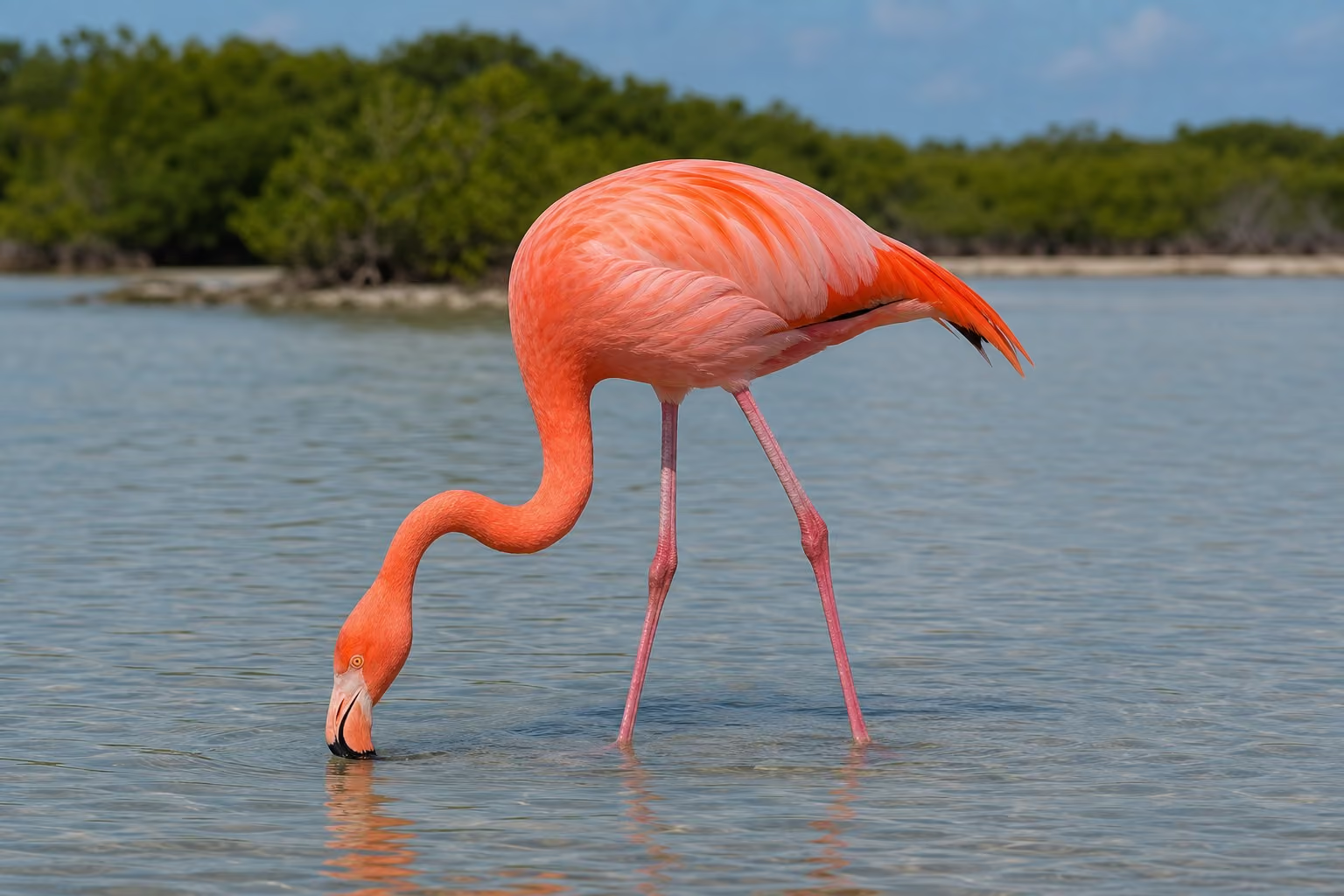
A vivid pink flamingo of Caribbean lagoons and saline lakes, using its bent bill to filter food from shallow water.

View in catalog
Key facts

  • American flamingo (Phoenicopterus ruber) is a filter feeder animal classified as Bird · Phoenicopteriformes · Phoenicopteridae.
  • Primary habitats are coast · freshwater, with a range across Neotropical · Nearctic · Atlantic Ocean.
  • Activity is diurnal, sociality is herd, and conservation status is LC (Least Concern).
  • A vivid pink flamingo of Caribbean lagoons and saline lakes, using its bent bill to filter food from shallow water.
  • Occurs around the Caribbean, Yucatan, Galapagos, and northern South America in salt lakes, tidal flats, and coastal lagoons.

Range

Habitat range map
Native rangeOccasional / Transient
Atlantic OceanAtlantic OceanAtlantic OceanAtlantic OceanAtlantic OceanNearcticNearcticNearcticNearcticNearcticNearcticNearcticNearcticNearcticNearcticNearcticNearcticNearcticNearcticNearcticNearcticNearcticNearcticNearcticNearcticNearcticNearcticNearcticNearcticNearcticNearcticNearcticNearcticNearcticNearcticNearcticNearcticNearcticNearcticNearcticNearcticNearcticNearcticNearcticNearcticNearcticNeotropicalNeotropicalNeotropicalNeotropicalNeotropicalNeotropicalNeotropicalNeotropical

Map: Ecoregions 2017 © RESOLVE (CC BY 4.0) · Natural Earth (PD)

Details

Habitat

Occurs around the Caribbean, Yucatan, Galapagos, and northern South America in salt lakes, tidal flats, and coastal lagoons.

Appearance

The body is deep pink to reddish, with long legs and neck. The large bill bends downward for filter feeding.

Behavior

Large flocks feed with heads lowered and bills held upside down in the water. Breeding colonies perform group displays.

Feeding

It filters algae, tiny crustaceans, and other invertebrates, and pigments in food influence the pink plumage.

Reproduction

Eggs are laid on cone-shaped mud nests. Adults feed chicks with a rich crop secretion.

Notes

Although conspicuous in tourist areas, breeding colonies are sensitive to water changes and disturbance.