Alpaca

Details

Alpaca

Vicugna pacos

Size
1.2–2.2 m · 48–84 kg
Diet
Herbivore
Activity
Diurnal
Sociality
Herd
Lifespan
15–20 years

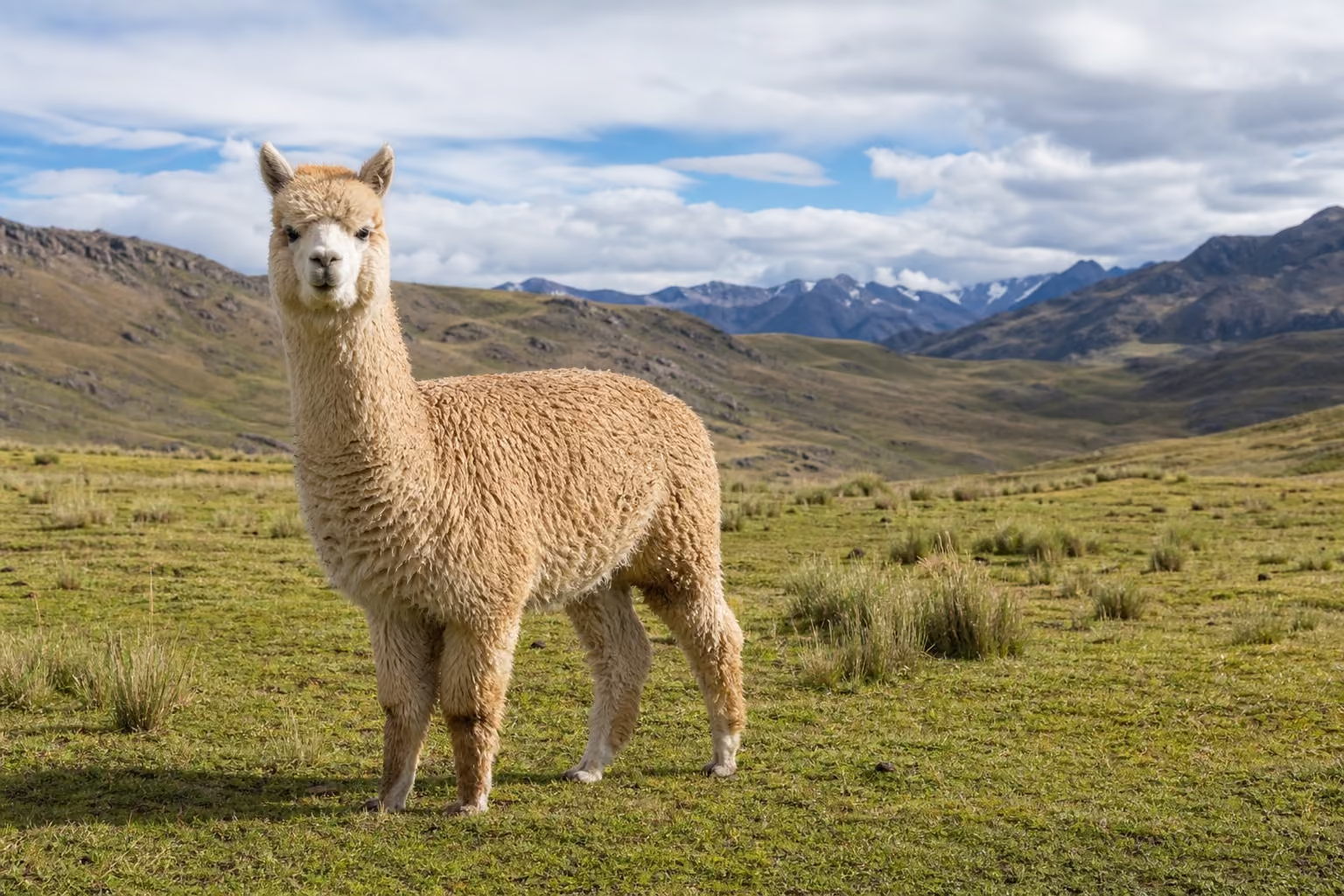
The alpaca is a domesticated South American camelid kept for its soft fleece. Herds graze highland pastures and live closely with human management.

View in catalog
Key facts

  • Alpaca (Vicugna pacos) is a herbivore animal classified as Mammal · Artiodactyla · Camelidae.
  • Primary habitats are mountains · grassland, with a range across Neotropical.
  • Activity is diurnal, sociality is herd, and conservation status is LC (Least Concern).
  • The alpaca is a domesticated South American camelid kept for its soft fleece.
  • It derives from Neotropical mountain grasslands and is kept mainly on Andean highland pasture.
  • Typical lifespan: 15–20 years

Range

Habitat range map
Native rangeOccasional / Transient
NeotropicalNeotropicalNeotropicalNeotropicalNeotropicalNeotropicalNeotropicalNeotropical

Map: Ecoregions 2017 © RESOLVE (CC BY 4.0) · Natural Earth (PD)

Details

Habitat

It derives from Neotropical mountain grasslands and is kept mainly on Andean highland pasture. Cool, dry open country suits it well.

Appearance

Length 120-220 cm; weight 48-84 kg. It has a long neck, padded two-toed feet, and dense soft fleece. Coat colors range from white and brown to black and grey.

Behavior

Diurnal and herd-living, it grazes calmly in groups. Spitting may occur during dominance disputes or defense.

Feeding

A herbivore, it eats grasses and low plants. A specialized foregut helps it use coarse highland forage, and soft lips select food close to the ground.

Reproduction

Females usually bear a single cria and nurse it within the herd. Young stand soon after birth and follow the mother.

Notes

It is treated as Least Concern as a domestic species. Welfare, grazing management, and sustainable fiber production are the main concerns.